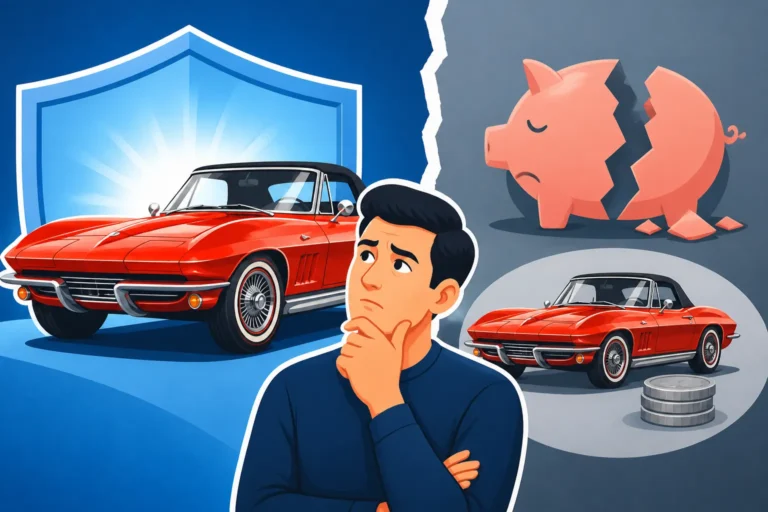
What Coverage a Classic Car Actually Needs
Owning a classic car is a profound joy, a journey back in time, and often, a significant investment of passion and funds. But when it comes to insuring your treasured ride, the typical auto policy designed for your daily driver just doesn't cut it. You're likely facing the daunting question of what coverage a classic car actually needs to truly protect it, and the confusion between standard and specialty policies is a common frustration. This guide is here to clarify the essential coverages and options that will properly safeguard your unique collectible.
Why Classic Car Insurance Isn't Like Regular Insurance
It’s easy to assume insurance is just insurance, but classic cars operate in a completely different universe than your modern sedan or SUV. Regular car insurance policies are built around the concept of "actual cash value" (ACV), which constantly depreciates a vehicle's worth over time. For a classic, which often appreciates in value, this model is fundamentally flawed and can leave you severely underinsured. The whole point of classic car ownership is often the opposite of depreciation!
The Valuation Dilemma: Agreed Value is King
This is hands-down the most critical difference between classic car insurance and a standard policy. With a regular car, if it's totaled, the insurer pays you what they determine its market value was at the time of the loss, less your deductible. This is the dreaded Actual Cash Value (ACV) and almost always leaves classic owners heartbroken and out of pocket. Imagine pouring thousands into restoring a vintage Mustang, only for an ACV policy to value it based on an un-restored model. It's a nightmare scenario.
Classic car insurance, on the other hand, typically offers "Agreed Value" coverage. This means you and the insurance company agree on a specific value for your vehicle before the policy is issued. If your classic is ever a total loss, the insurance company pays you that exact agreed-upon amount, no questions asked, minus your deductible. This peace of mind is invaluable, ensuring your investment is protected. Without this, you run the risk of significant financial loss, which is why Agreed Value Coverage Explained is something every collector should deeply understand. Some policies might also offer "Stated Value" which can seem similar but often allows the insurer to pay up to that amount or the ACV, whichever is less, potentially leaving you in a similar bind to ACV. For a truly deep dive into these nuances, check out Agreed Value vs Stated Value vs Actual Cash Value.
Understanding Usage and Mileage Restrictions
Another key distinction is how classic cars are used versus daily drivers. Most classic car insurance policies come with specific usage stipulations and mileage limits. This isn't because insurers want to stop you from enjoying your car, but because these vehicles are generally driven less frequently, more carefully, and for specific purposes like shows, club events, or leisurely drives. This reduced risk profile is actually what often makes classic car insurance more affordable than regular auto insurance.
You might find policies with annual mileage limits ranging from 1,000 to 5,000 miles, or sometimes even unlimited mileage options for those who tour more extensively. The "pleasure use" requirement is common, meaning your classic isn't intended for routine errands, commuting, or daily transportation. These restrictions are vital to adhering to your policy terms. Understanding your state's specifics, such as Classic Car Insurance Mileage Limits by State, can help you select the right policy that matches how much you truly drive your cherished vehicle. This also ties into the general Pleasure-Use Requirement Explained, which clarifies the type of driving that specialty insurers expect.
Essential Coverage Types for Your Classic
Now that we've covered the fundamental differences, let's break down the specific types of coverage that are truly essential for protecting your classic car. Think of these as the bedrock of a robust classic car insurance policy.
Agreed Value Coverage
As mentioned, this is the absolute cornerstone of any good classic car policy. It is what truly differentiates specialty insurance from a standard auto policy that will inevitably shortchange you if your classic is ever totaled or stolen. With Agreed Value, you and your insurer, perhaps a specialized provider like Hagerty, determine your car's true market value at the outset of the policy. This figure is based on factors like condition, provenance, modifications, and recent sales data for comparable vehicles.
Let’s say you own a meticulously restored 1969 Chevrolet Camaro Z/28 valued at $90,000. Under an Agreed Value policy, if it's unfortunately deemed a total loss due to an accident or fire, you would receive that full $90,000 (minus your deductible). This contrasts sharply with an ACV policy, where an adjuster might only offer you $40,000 based on a generic valuation that doesn't account for its collector status and restoration quality. This guaranteed payout is paramount for peace of mind, knowing your investment is secure, which is why we talk so much about Agreed Value Coverage for Classic Cars Explained.
Liability Coverage
Just like any other vehicle on the road, your classic car needs liability coverage. This protects you financially if you're at fault in an accident that causes bodily injury or property damage to others. While classic cars are typically driven more cautiously, accidents can still happen. State laws mandate minimum liability limits, but it's often wise for classic car owners to carry higher limits than the bare minimum. Why? Because the potential costs of medical bills and property damage can be astronomical, and if your limits aren't high enough, your personal assets could be at risk.
For instance, if you're involved in an incident where your classic bumps into a modern luxury SUV, the repair costs could easily exceed basic property damage limits. Similarly, medical expenses for injuries to others can quickly climb. Investing in robust liability coverage means you're protecting not just your classic, but your financial future. Always check Classic Car Liability Requirements by State to understand the legal minimums where you live, but strongly consider exceeding them for enhanced protection.
Comprehensive and Collision Coverage
These two coverages work in tandem to protect your own classic car from damage, theft, or other unforeseen events.
- Collision Coverage: This pays for damages to your classic if it collides with another vehicle or object, or if it rolls over. Whether it's a fender bender at a car show parking lot or a more serious incident, collision coverage ensures your prized possession can be repaired or, in the case of a total loss, pays out its agreed value. Given the rarity and expense of classic car parts, robust collision coverage is non-negotiable for most collectors.
- Comprehensive Coverage: This is your protection against non-collision incidents. Think theft, vandalism, fire, natural disasters (like hail or floods), falling objects (like a tree branch), or even striking an animal. If your classic is stolen from its garage, comprehensive coverage will step in. This is particularly important because classic cars are often targets for thieves, and the components themselves are valuable.
Many classic car owners mistakenly believe they only need liability if their car isn't driven much. However, a classic spending most of its time in a garage is still susceptible to fire, theft, or storm damage. Therefore, Do Classic Cars Need Full Coverage is a crucial question to ask yourself, and for most, the answer is a resounding "yes" to comprehensive and collision, especially with Agreed Value attached.
Important Add-Ons and Endorsements to Consider
Beyond the core coverages, specialty classic car insurance policies offer a range of endorsements and add-ons designed specifically for collectors. These additional protections can be incredibly valuable, filling in gaps that standard policies wouldn't even consider.
Spare Parts and Tools Coverage
Many classic car enthusiasts accumulate a collection of spare parts, engines, transmissions, and specialized tools over the years. These items, often rare and expensive, can represent a significant investment in their own right. A standard homeowner's policy might offer minimal coverage for such items, but it's rarely enough to cover the true value of a vintage carburetor or a set of period-correct wheels.
Specialty classic car insurers like Hagerty offer specific Spare Parts Coverage Explained as an add-on. This ensures that your collection of invaluable parts, whether stored in your garage or accompanying your car to a show, is protected against theft, fire, or damage. Imagine the despair of losing a stash of New Old Stock (NOS) parts – this coverage prevents that financial heartache. It's a lifesaver for anyone seriously invested in maintaining or restoring their classic.
Restoration Coverage
For those embarking on the exciting, yet often lengthy, journey of restoring a classic car, this coverage is indispensable. A car under restoration presents unique insurance challenges: its value fluctuates as work progresses, and it might be in various states of disassembly. A traditional policy won't understand how to value a car that's currently a pile of parts but destined to be a show-stopper.
Restoration coverage allows you to insure your vehicle during its build process. You can update the agreed value as significant milestones are reached and more capital is invested. This means if a fire breaks out in your workshop, or if parts are stolen during the restoration, you're covered for the value of the car and the work invested up to that point. Without it, you could lose thousands in parts and labor. Learning about Restoration Coverage for Classic Cars is a must for any project car owner.
Roadside Assistance and Trip Interruption
Let's face it, classic cars, while robust, are still older machines. A roadside breakdown isn't an uncommon occurrence, and you can't just call any tow truck to haul your cherished classic. Standard roadside assistance often uses hook-and-chain towing, which can severely damage a classic car's delicate frame or suspension.
Specialty classic car insurance often includes or offers as an add-on dedicated roadside assistance that provides flatbed towing. This ensures your classic is transported safely without further damage. Furthermore, trip interruption coverage can be a godsend if you're on a multi-day tour or heading to an out-of-state show. If your classic breaks down far from home, this coverage can help with lodging, rental car, and even alternative transportation expenses while your car is being repaired. It helps make those long-distance drives less stressful, knowing you have a safety net.
Inflation Guard Coverage
The market for classic cars can be dynamic, with values often appreciating over time, especially for rare or desirable models. This upward trend can quickly outpace your initial Agreed Value, leaving you unknowingly underinsured as years go by. This is where Inflation Guard Coverage Explained becomes incredibly useful.
Inflation guard is an endorsement that automatically increases your classic car's Agreed Value by a small percentage each year (e.g., 2% to 6%) at renewal, without you having to go through a re-appraisal every single time. This helps your policy keep pace with market appreciation, ensuring that the payout in the event of a total loss remains reflective of its current worth. While it doesn't replace periodic re-appraisals for significant market shifts or major restorations, it provides a valuable buffer against gradual inflation, preventing underinsurance.
Tailoring Your Policy to Your Driving Habits and Storage
Just as important as choosing the right coverages is ensuring your policy accurately reflects how you use and store your classic. These factors directly influence your eligibility and premiums.
Mileage Tiers and Their Impact
As we discussed earlier, classic car policies often have mileage limits. These aren't one-size-fits-all, and many insurers offer different "mileage tiers" to suit various levels of use. For example, a basic tier might allow for up to 1,000 miles per year, while a mid-tier could go up to 3,000 or 5,000 miles, and some specialty providers even offer unlimited mileage for serious tourers.
Choosing the right mileage tier is crucial. If you exceed your stated mileage, you could risk your claim being denied, or your policy could be canceled. On the flip side, paying for an unlimited mileage policy when you only drive your classic 500 miles a year means you're likely overpaying. Be honest with your insurer about your anticipated annual mileage. This directly impacts your premium; typically, the lower the mileage, the lower your premium. Understanding How Mileage Tiers Work for Classic Cars allows you to select a policy that perfectly aligns with your usage patterns, saving you money while maintaining proper coverage.
Garage Storage Requirements and Their Role
Where and how you store your classic car is a significant factor for insurance providers. Most specialty classic car insurance companies require that your vehicle be stored in a secure, enclosed, and locked structure, such as a private garage or dedicated storage facility, when not in use. This requirement significantly reduces the risk of theft, vandalism, and environmental damage.
A carport or simply parking your classic in a driveway or on the street usually won't cut it for a specialty policy. These less secure storage options present a higher risk, which conflicts with the lower-risk profile classic insurers depend on. Some policies might offer limited coverage for temporary outdoor storage (e.g., at a car show overnight), but for day-to-day storage, a secure garage is almost always a prerequisite. Familiarizing yourself with Garage Storage Requirement for Classic Cars will help you understand what insurers expect and ensure your vehicle is properly protected and eligible for coverage. Secure storage not only helps you qualify for better rates but also genuinely protects your classic from many common threats.
Comparing Your Classic Car Insurance Options
Choosing the right classic car insurance can feel overwhelming, given the number of options and specific requirements. It's not just about finding the cheapest policy, but the one that offers the most comprehensive protection for your unique investment. Always compare quotes from several specialty providers like Hagerty, Grundy, and American Collectors Insurance to ensure you're getting the best blend of coverage and value.
When comparing, pay close attention to:
- Agreed Value: Is it a true Agreed Value policy, or a Stated Value that could leave you short?
- Deductibles: What are your options, and how do they impact your premium?
- Included Add-ons: Does the policy automatically include things like roadside assistance, or are they extra?
- Mileage Flexibility: Does the chosen mileage tier genuinely match your driving habits?
- Customer Service: How responsive and knowledgeable are the claims departments, especially when dealing with unique classic car situations?
Taking the time to understand these details will not only help you get the best deal but also give you invaluable peace of mind that your classic is truly protected. For a broader view, you might want to look into How to Compare Classic Car Insurance Quotes or even a deeper dive into Best Classic Car Insurance Companies. Ultimately, the goal is to secure a policy that understands and respects the unique value of your automotive masterpiece, allowing you to enjoy it for years to come without unnecessary worry.
| Feature | Agreed Value Coverage | Stated Value Coverage | Actual Cash Value (ACV) Coverage |
|---|---|---|---|
| Preamble | Ideal for Classics & Collectibles | Can Be Misleading for Collectors | Standard for Daily Drivers; Poor for Classics |
| Valuation Method | Value determined and agreed upon by you and insurer at policy inception. | You "state" a value, insurer pays up to that amount or ACV, whichever is less. | Insurer determines market value at the time of loss, accounting for depreciation. |
| Payout in Total Loss | You receive the exact agreed-upon amount (minus deductible). | Insurer may pay less than stated value if market value/ACV is lower. | You receive depreciated market value (minus deductible). |
| Protection Level | Highest – Guarantees full replacement of your investment. | Moderate – Can leave you underinsured if ACV is low. | Lowest – Almost always leads to underinsurance for classics. |
| Premium | Generally higher than ACV, but reflects true value. | Varies, might appear lower than Agreed Value but has risk. | Generally lowest for modern cars due to depreciation. |
| Best Use Case | Highly valued, appreciating classic cars, muscle cars, hot rods, unique builds. | Useful for modified cars that don't fit standard ACV, but with caution. | Standard vehicles that depreciate with age and mileage. |
| Peace of Mind | Excellent. No surprises during a claim. | Limited. Uncertainty about final payout. | Very low for classic car owners. |
Disclaimer
This article is for general informational purposes only and does not constitute professional advice. Laws, prices and regulations vary by location and change over time. Consult a qualified professional for guidance on your specific situation.