How Agreed Value Coverage Works for Collectors
One of the biggest anxieties any classic car enthusiast faces isn't just a breakdown on the side of the road, it's the nightmare scenario of a total loss. Whether it's a fender bender gone terribly wrong or a devastating garage fire, the fear is always that your beloved machine won't be valued properly by an insurance company. This guide is here to walk you through exactly how agreed value coverage works for collectors, offering the peace of mind that your investment and passion will be truly protected.
The Challenge of Valuing a Cherished Classic Car for Insurance
Let's be honest, trying to insure a classic car with a standard auto policy often feels like trying to fit a square peg in a round hole. Traditional insurance companies just don't understand the unique nature of these vehicles, and that can lead to some truly frustrating and heartbreaking situations when it comes to a claim.
Why Standard Auto Policies Fall Short
The biggest culprit in the traditional insurance world is something called Actual Cash Value (ACV). With an ACV policy, if your car is totaled, the insurance company will only pay out what they deem the vehicle was worth at the time of the loss, factoring in depreciation. Now, imagine applying that logic to your pristine 1969 Camaro or your meticulously restored 1957 Chevrolet Bel Air. These cars don't depreciate like a new daily driver. In fact, many classics appreciate in value!
The very idea of depreciation is anathema to a classic car owner. You've poured countless hours and dollars into maintaining, restoring, and cherishing your vehicle. To have an insurer tell you that your irreplaceable piece of automotive history is only worth a fraction of its true value because of a standard depreciation formula is an insult, not to mention a financial disaster. Even a "stated value" policy, which sounds promising on the surface, can be misleading. While it might state a maximum payout, the insurer often reserves the right to pay less based on their own valuation after a loss, leaving you in a similar bind. This is why understanding Agreed Value vs Stated Value vs Actual Cash Value is so critical for any serious collector.
The Collector's Dilemma: Protecting Your Investment
For many of us, classic cars aren't just vehicles; they're rolling works of art, pieces of history, and often significant financial investments. The sentimental value alone is immeasurable, but beyond that, the market for collector cars can be incredibly dynamic. The cost of a full, frame-off restoration can easily exceed the car's initial purchase price, and those costs need to be protected.
Think about a car you've just spent three years meticulously bringing back to life, from sourcing rare parts to countless hours in the garage. If an unforeseen accident or a catastrophic fire strikes, you need an assurance that your time, effort, and financial outlay will be fully recognized. The fear of getting a check that barely covers the cost of a new paint job, let alone a total loss, is very real. This is where specialist classic car insurers and agreed value coverage step in, understanding that these vehicles require a fundamentally different approach to protection. They grasp that the value isn't just about utility; it's about scarcity, condition, provenance, and the blood, sweat, and tears of ownership.
What is Agreed Value Coverage and How Does It Work?
Now that we've established why standard insurance often fails collectors, let's dive into the solution: agreed value coverage. This is the cornerstone of any solid classic car insurance policy and provides the peace of mind every collector truly deserves.
Defining Agreed Value
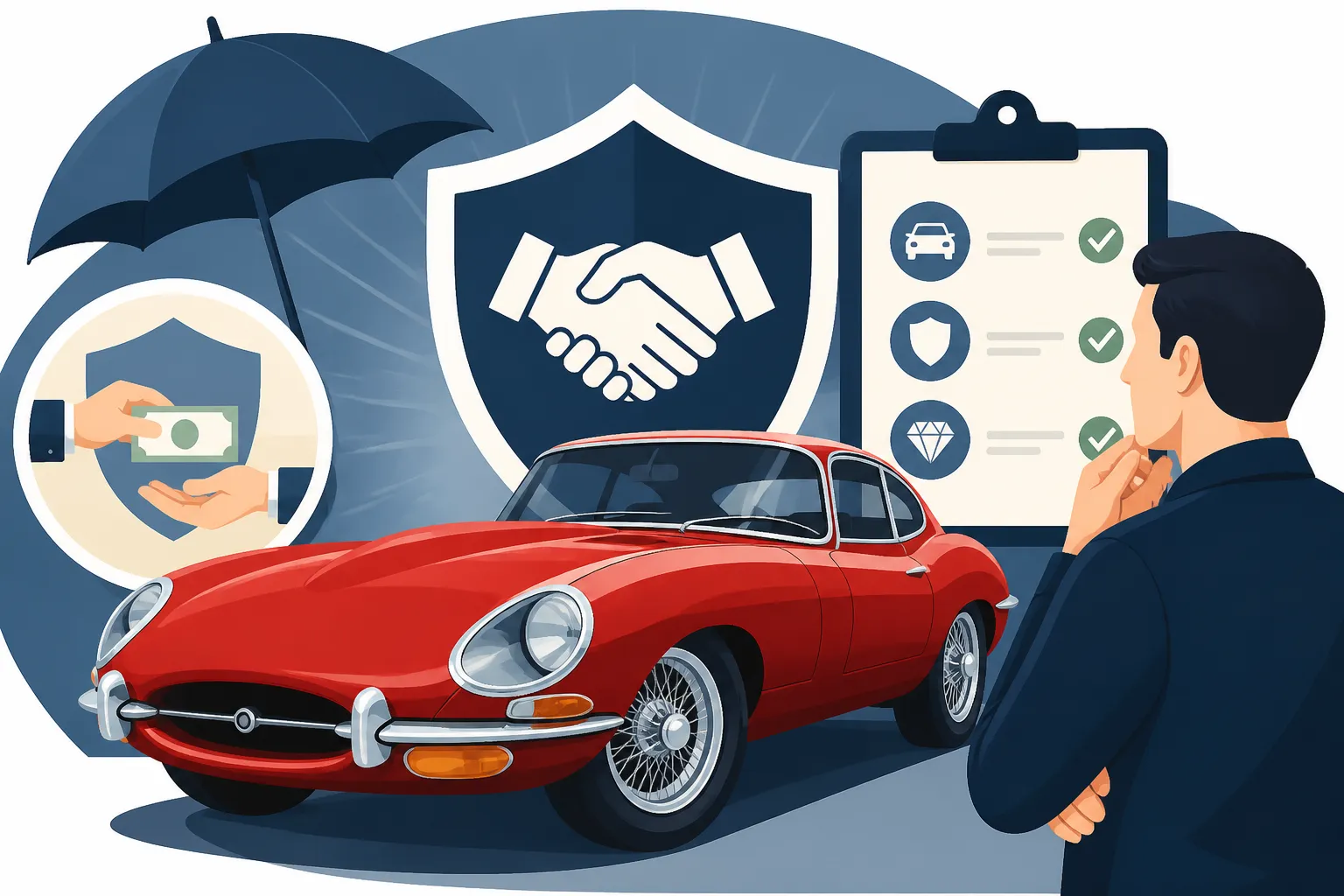
Simply put, agreed value coverage means that you, the policyholder, and the insurance company agree on a specific value for your classic car at the beginning of your policy term. This isn't an estimate; it's a firm commitment. If your car is declared a total loss due to a covered incident (like theft, accident, or fire), the insurance company will pay you that exact agreed-upon amount, minus any applicable deductible. It's that straightforward.
This differs dramatically from ACV, where the value is determined after the loss, and from stated value, which might state a maximum but still allow for a lower payout. With agreed value, there's no haggling over depreciation, no market adjustments downwards after an incident. What you and the insurer agreed to is what you get. This pre-determined sum gives you certainty and protection, reflecting the true worth of your unique vehicle. Many specialist insurers, like Hagerty, built their entire business around this core principle, recognizing that collector cars demand this level of protection. You can learn more about this crucial concept in Agreed Value Coverage Explained.
The Agreement Process: Setting the Value
Establishing the agreed value isn't a shot in the dark; it's a collaborative process designed to accurately reflect your car's true market worth. Here's how it generally works:
- Your Research and Documentation: You'll start by providing the insurer with details about your car. This includes its make, model, year, VIN, history, condition, and any modifications or significant restoration work. High-quality photos from various angles are almost always required.
- Professional Appraisal (Often Recommended): For higher-value classics or highly customized vehicles, a professional appraisal from a certified classic car appraiser is highly recommended, and sometimes even required by the insurer. An appraiser will conduct a thorough inspection, considering factors like originality, condition, rarity, provenance (ownership history), and current market trends. They'll compare your car to recent sales of similar vehicles, providing an objective and detailed report that substantiates the value. This report becomes a crucial piece of evidence in setting your agreed value. For more insights, check out How Appraisals Support Agreed Value.
- Insurer's Valuation Tools and Expertise: Specialist classic car insurers have extensive databases and expert staff who understand the collector car market. They'll review your documentation, appraisal (if provided), and use their own resources to concur on a fair agreed value. Companies like Hagerty have sophisticated valuation tools that track market trends for thousands of classic models, helping ensure the agreed value is realistic and current.
- Mutual Agreement: Once both parties agree on the figure, it's locked into your policy. This is the amount that will be paid out in the event of a total loss. This transparent process ensures that there are no surprises down the line, giving you peace of mind.
This careful valuation process is vital because it directly impacts your premium and, more importantly, your payout. It's a critical step in ensuring your classic car insurance truly protects your investment.
Key Benefits for Collectors
The advantages of agreed value coverage for classic car collectors are profound and address the core concerns that traditional insurance policies simply cannot.
- Financial Certainty and Peace of Mind: This is perhaps the most significant benefit. You know exactly how much you'll receive if your car is totaled, removing the anxiety and uncertainty associated with post-loss valuations. This allows you to focus on enjoying your classic, not worrying about its "depreciated" value.
- Protection for Your Investment: Unlike regular cars that lose value, many classics appreciate. Agreed value coverage acknowledges this by locking in a value that reflects your car's true worth, including any appreciation, restoration costs, or modifications. It protects the significant financial and emotional investment you've made.
- Simplified Claims Process: In the unfortunate event of a total loss, the claims process is generally much smoother with agreed value. There's no lengthy negotiation over the car's market value; the amount is already agreed upon. This means a quicker resolution and less stress during an already difficult time.
- Customization and Specialization: Specialist insurers like American Collectors Insurance and J.C. Taylor offer policies specifically tailored for collector vehicles. This means their policies include features and coverages (like spare parts coverage, restoration coverage, and roadside assistance designed for classics) that standard policies simply don't. They understand the nuances of owning and maintaining a classic, which translates to better service and more comprehensive protection.
This specialized approach is why Why Agreed Value Matters for Classics is a fundamental piece of knowledge for anyone involved in the classic car hobby. It's about getting the right kind of insurance that understands the unique world of collector vehicles.
The Mechanics of an Agreed Value Payout
Understanding what happens when you actually need to use your agreed value coverage is just as important as knowing how it's established. The process is designed to be as clear and straightforward as possible, minimizing stress during a difficult time.
Total Loss Scenarios
An agreed value policy kicks in when your classic car is deemed a "total loss." This typically means the cost to repair the damage exceeds a certain percentage of the agreed value (e.g., 75-80%), or the vehicle is stolen and not recovered. Common scenarios that lead to a total loss include:
- Major Collisions: A severe accident, unfortunately, can render a classic car irreparable, or the cost of sourcing specialized parts and skilled labor makes repairs economically unfeasible.
- Theft: If your cherished classic is stolen and never recovered, or recovered in such a state that it's beyond reasonable repair, it would be considered a total loss.
- Fire Damage: Engine fires, garage fires, or other accidental blazes can quickly devastate a classic, often leading to a total loss declaration.
- Natural Disasters: Flooding, hurricanes, tornadoes, and severe hail can inflict widespread damage that makes restoration impractical or impossible.
In any of these situations, once the insurer confirms the total loss, they will pay out the agreed value amount stipulated in your policy, minus your deductible. This contrasts sharply with a regular policy where the payout would be the ACV, which could be devastatingly low for a classic. Many classic car owners opt for comprehensive coverage to protect against these non-collision damages, as detailed in What Does Classic Car Insurance Cover.
Deductibles and Salvage Options
Just like a standard auto policy, an agreed value policy will have a deductible. This is the amount you are responsible for paying out-of-pocket before your insurance coverage kicks in. For example, if your agreed value is $50,000 and your deductible is $1,000, you would receive $49,000 in the event of a total loss. Specialist insurers often offer flexible deductible options, allowing you to choose one that fits your budget and risk tolerance. A higher deductible typically results in a lower premium, and vice-versa.
Another crucial aspect is the salvage option. For many collectors, even a "totaled" classic holds immense sentimental value, or perhaps still has valuable original components or a restorable frame. Unlike standard insurance where the insurer takes possession of the salvage, many agreed value policies, especially from companies like Grundy, offer you the option to retain the salvage. This means the insurer pays you the agreed value, minus the deductible and the determined salvage value of the vehicle. You get to keep the car and either restore it again, part it out, or simply keep it for sentimental reasons. This is a huge benefit that recognizes the unique attachment collectors have to their vehicles and parts.
Maintaining and Updating Your Agreed Value
The classic car market isn't static, and neither are your cars. As your vehicle changes, or as market values fluctuate, it's incredibly important to keep your agreed value up to date. Neglecting this could leave you underinsured, even with a great policy.
Why Regular Reviews are Crucial
Imagine you set an agreed value for your 1970 Chevelle SS ten years ago. Since then, you've completed a full restoration, swapped in a period-correct engine, and the market for muscle cars has exploded. If your policy's agreed value hasn't been updated, you could find yourself dramatically underinsured in the event of a total loss. The payout would only be that original, lower agreed value, leaving you thousands, if not tens of thousands, of dollars short of what your car is truly worth today.
Classic cars are often living projects. They undergo restorations, modifications, and careful maintenance that significantly enhance their value. Furthermore, the collector car market is influenced by trends, economic factors, and the availability of certain models. What was a fair agreed value five years ago might not reflect your car's current worth. Companies like Hagerty regularly publish valuation guides that highlight these market changes, emphasizing the need for periodic policy reviews. Neglecting to update your agreed value is a common pitfall that can negate the very purpose of having this specialized coverage. This is especially true if you're undertaking a significant project, which is why considering Restoration Coverage for Classic Cars is vital.
Process for Adjusting Agreed Value
Fortunately, updating your agreed value is a straightforward process designed to keep your coverage aligned with your car's true worth.
- Monitor Your Car's Value: Keep an eye on the market for similar vehicles. Websites like Bring a Trailer and auction results can give you a good sense of current values. If you've made significant improvements, keep detailed records and receipts.
- Document Improvements: If you've undertaken a major restoration, engine swap, or added significant period-correct modifications, document everything. Keep receipts for parts, labor, and take "before and after" photos. These documents are vital evidence for increasing your car's value.
- Obtain a New Appraisal: For substantial value increases or major market shifts, a new professional appraisal is the most robust way to justify an increase in your agreed value. The appraiser will assess all the improvements and current market conditions. This is a key step in How to Increase Your Agreed Value Over Time.
- Contact Your Insurer: Reach out to your classic car insurance provider. Share your updated documentation and any new appraisal reports. They will review the information and work with you to adjust the agreed value on your policy. This often happens at renewal time, but can be done mid-term if a significant event (like a completed restoration) warrants it. Being proactive here is essential. For further guidance, consult When to Update Your Classic Car's Agreed Value.
Comparing Valuation Approaches for Classic Cars
To truly appreciate the power of agreed value, it helps to see it side-by-side with the other common valuation methods. This table illustrates why agreed value is generally the superior choice for collector vehicles.
| Feature | Agreed Value Coverage | Actual Cash Value (ACV) Coverage | Stated Value Coverage |
|---|---|---|---|
| Payout in Total Loss | Fixed amount, agreed upon at policy inception. | Market value at time of loss, minus depreciation. | Max payout stated, but insurer can pay less based on appraisal. |
| Valuation Process | Policyholder & insurer agree on value upfront, often with appraisal. | Determined by insurer after loss, using depreciation models. | Policyholder states value, insurer may verify; actual payout flexible. |
| Depreciation | Not a factor in payout calculation. | Central factor; significant depreciation applied. | Can be a factor; insurer often still applies depreciation models. |
| Protection for Classics | Excellent; protects investment and sentimental value. | Very Poor; devalues unique collector items. | Sub-optimal; provides a ceiling but no guarantee of full payout. |
| Certainty of Payout | High; amount is pre-determined. | Low; amount is unknown until after loss. | Moderate; ceiling is known, but actual payout can be lower. |
| Market Fluctuations | Updated by policyholder at renewal to reflect market. | Reflects current market after depreciation. | May or may not accurately reflect market, depends on insurer's post-loss assessment. |
| Best For | Collector cars, antiques, hot rods, unique vehicles. | Daily drivers, commodity vehicles. | Less common for classics; offers minimal advantage over ACV. |
This comparison really highlights the critical distinction. For a vehicle that means so much to you, both financially and emotionally, the certainty and fair compensation provided by agreed value coverage are simply unmatched. When looking into How Much Does Classic Car Insurance Cost, remember that the peace of mind offered by agreed value is worth every penny.
Conclusion
Navigating the world of classic car insurance can feel complex, but understanding agreed value coverage is truly the key to protecting your automotive passion and investment. It moves beyond the limitations of standard auto policies, offering a pre-determined, guaranteed payout that reflects the true worth of your cherished vehicle. By proactively working with specialist insurers like Hagerty to establish an accurate value, documenting your car's journey, and updating your policy as its value evolves, you ensure that you're fully covered against unforeseen events. This isn't just about insurance; it's about securing the legacy and future of your classic car.
Disclaimer
Please remember that this article provides general information and guidance regarding agreed value classic car insurance. Insurance policies and requirements can vary significantly by provider and state. It is always recommended to consult directly with a licensed insurance professional or specialty classic car insurance provider to discuss your specific needs and obtain personalized advice and quotes.