Endorsements Every Collector Should Consider
It’s a feeling all too familiar to classic car enthusiasts: you’ve poured your passion, time, and hard-earned money into acquiring and maintaining your dream machine, only to find that standard auto insurance just doesn’t “get it.” Regular policies are designed for daily drivers that depreciate, not for the appreciating works of automotive art we cherish. This disconnect often leaves collectors vulnerable to significant financial loss in the event of an accident, theft, or damage. This comprehensive guide will walk you through the essential classic car insurance endorsements that every collector should meticulously consider, ensuring your prized possession receives the specialized protection it truly deserves.
Why Standard Auto Policies Fall Short for Classic Cars
Trying to insure a classic car with a regular auto insurance policy is like trying to fit a square peg into a round hole. It simply doesn't work, and often leaves glaring gaps in coverage that can lead to heartbreak down the road. The unique nature of classic and collector vehicles demands a different approach, one that recognizes their inherent value, their limited use, and the specific risks associated with them.
The Unique Vulnerabilities of Collectibles
Unlike your everyday sedan, a classic car’s value isn't just about its utility or how quickly it can get you from point A to point B. It’s about history, craftsmanship, rarity, and often, sentimental attachment. A vintage Ford Mustang Fastback isn't merely transportation; it's a piece of automotive heritage, a rolling sculpture that commands attention and appreciation. Standard insurance policies operate on the principle of Actual Cash Value (ACV), meaning they’ll pay out what they determine the car is worth at the time of loss, factoring in depreciation. For a classic, which often appreciates in value, this is a recipe for disaster. You could spend years restoring a vehicle, only for an ACV policy to value it at a fraction of your investment, leaving you significantly out of pocket. Imagine your painstakingly restored 1969 Chevrolet Camaro, valued at $80,000 in the collector market, being totaled, and a standard insurer offering you $30,000 based on some generic depreciation schedule. It’s a frustrating scenario many collectors dread.
The Coverage Gap in Standard Insurance
Beyond valuation, traditional auto insurance policies are simply not built for the typical use case of a classic car. Most classics are not daily drivers; they’re weekend cruisers, show cars, or garage queens. Their limited mileage, careful storage, and specialized maintenance requirements are completely foreign to conventional insurers. This leads to crucial coverage gaps. For instance, if your garage full of rare, irreplaceable spare parts for your 1957 Chevrolet Bel Air is destroyed in a fire, a standard homeowner's policy might cover some general contents, but it certainly won't understand or adequately value a collection of NOS (New Old Stock) parts. Similarly, if you’re trailering your show car to a regional event and the trailer detaches, causing damage, a regular policy might only cover the trailer, leaving your valuable classic exposed. This is why understanding Classic Car Insurance vs Regular Insurance: What's Required is so important—it highlights the fundamental differences in protection. To truly protect your investment and passion, specialized classic car insurance, replete with specific endorsements, is not just an option, it's a necessity.
Essential Endorsements to Safeguard Your Classic's Value
When it comes to insuring your beloved classic, think of endorsements as tailor-made additions to your policy that plug the holes left by generic coverage. These are the specialized protections that truly understand the unique value and use of a collector vehicle.
Agreed Value Coverage
This is, without a doubt, the cornerstone of any robust classic car insurance policy. Unlike standard policies that use Actual Cash Value (ACV) or even Stated Value, Agreed Value means you and the insurance company agree on your car's value before the policy is issued. If your classic is ever a total loss, the insurer pays out that exact agreed-upon amount, no questions asked, no depreciation calculations.
Imagine owning a rare 1963 Split-Window Corvette. Its market value can fluctuate wildly based on condition, originality, and collector demand. With an ACV policy, an adjuster might come in after a total loss and offer you a sum far below what you know the car is truly worth, leading to frustrating disputes and financial hardship. However, with Agreed Value Coverage Explained, if you and your insurer, like a company such as Hagerty, agreed on a value of $150,000 for your Corvette, that’s exactly what you’ll receive if it’s totaled. This peace of mind is invaluable, removing the guesswork and ensuring your investment is fully protected. It’s crucial to understand How Agreed Value Is Determined to ensure your coverage is accurate from the start.
Spare Parts and Tools Coverage
For many collectors, the garage isn't just a place to park the car; it's a treasure trove of rare parts, specialized tools, and project components. These items can represent a significant financial investment, often critical for maintaining the originality or functionality of your classic. Unfortunately, standard homeowner’s insurance or typical auto policies rarely extend adequate coverage to these specialized items, or they might have extremely low limits.
A dedicated Spare Parts Coverage Explained endorsement steps in to protect these assets. Let’s say you’ve spent years collecting original parts for a complete frame-off restoration of a 1932 Ford roadster. You have a pristine set of fenders, an original flathead V8 block, and numerous rare interior pieces, collectively valued at $20,000. If a fire or theft devastates your workshop, this endorsement ensures these invaluable components are covered. Without it, you could be left with nothing but the memory of your carefully curated collection. This coverage is essential for anyone who invests heavily in maintaining, repairing, or restoring their classic vehicles.
Restoration Coverage
The journey of restoring a classic car is often a labor of love, spanning months or even years. During this process, the car’s value typically increases incrementally as each new part is installed, and each stage of work is completed. A basic policy might only cover the initial value of the car before restoration, which could be a rusty hulk. This leaves a massive gap in protection for the ongoing investment of parts and labor.
Restoration Coverage for Classic Cars is an endorsement specifically designed to address this. It allows you to periodically update the insured value of your vehicle as restoration progresses. For example, if you start with a $10,000 shell of a 1970 Dodge Challenger and, six months in, you’ve invested $30,000 in engine work, body repairs, and new components, this endorsement lets you increase your agreed value to $40,000. This way, if disaster strikes midway through the project – a workshop fire, theft of the partially restored car, or damage during transport – you’re not just recovering the initial derelict value. You’re protecting the escalating financial and emotional investment you’ve made. This coverage is absolutely vital for anyone undertaking a significant build or restoration project.
Inflation Guard Coverage
While "depreciation" is a dirty word in the classic car world, "appreciation" is music to a collector's ears. Many classic cars, particularly those in desirable condition or with increasing rarity, tend to climb in value over time. The market for vintage vehicles is dynamic, and what your car was worth last year might be significantly less than its value today. While agreed value coverage sets a specific payout, without an adjustment mechanism, your policy could quickly become outdated and underinsured.
Inflation Guard Coverage Explained is an endorsement that provides a built-in solution for this. It automatically increases your agreed value by a small, predetermined percentage (often 2-5%) at each renewal period. This proactive adjustment helps ensure that your coverage keeps pace with the appreciating market value of your classic, without requiring you to get a new appraisal every single year. For instance, if your 1965 Ford Mustang GT was valued at $60,000 and the market sees a strong upward trend, inflation guard could bump your coverage to $61,800 next year, reflecting its rising worth. This small addition can make a huge difference in the long run, safeguarding against the very real risk of your beloved classic outgrowing its insurance protection.
Enhancing Your Collector Experience with Additional Endorsements
Beyond the core protections for your car's value, several other endorsements can significantly enhance your peace of mind and protect you during the unique activities associated with classic car ownership. These cover everything from roadside emergencies to participation in events.
Roadside Assistance and Flatbed Towing
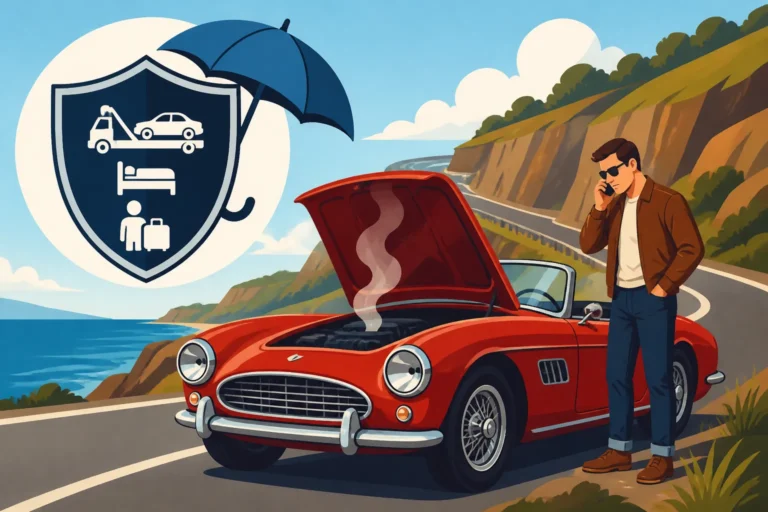
Picture this: you're enjoying a beautiful Sunday drive in your vintage Volkswagen Beetle, miles from home, when suddenly, a sputtering sound turns into silence. A breakdown is frustrating enough in a modern car, but for a classic, it can be a nightmare. Standard roadside assistance often means a hook-and-chain tow truck, which can cause significant damage to delicate suspension, low-slung bodywork, or antique bumpers.
This is where specialized Roadside Assistance Coverage for Classic Cars comes into play. This endorsement ensures that if your classic breaks down, a flatbed tow truck will be dispatched. A flatbed gently cradles your vehicle, lifting all four wheels off the ground, preventing any potential damage during transport. Many specialty insurers, like Hagerty, understand this critical need and offer comprehensive flatbed towing as part of their roadside assistance package. They know you wouldn’t trust your prized possession to just anyone, and neither should your insurance. This coverage often extends to tire changes, battery jump-starts, and fuel delivery, all tailored for the specific needs of a classic.
Trip Interruption Coverage
For many classic car enthusiasts, the joy of ownership isn't just about polishing the chrome in the garage; it's about hitting the open road, attending distant car shows, or embarking on scenic rallies. These road trips can be unforgettable, but they also carry the risk of mechanical issues far from home. If your classic breaks down hundreds of miles away, the unexpected costs of lodging, food, and alternative transportation can quickly add up, turning a dream trip into a financial headache.
Trip Interruption Coverage for Classic Cars is designed specifically for these scenarios. If your insured classic suffers a covered loss (like a breakdown or accident) more than a certain distance from your home, this endorsement will help cover the costs of temporary accommodation, meals, and even rental car expenses to get you home or allow you to continue your journey. Imagine driving your Datsun 240Z to a major national show, only for an unforeseen mechanical issue to leave you stranded in a town without a mechanic specializing in vintage imports. This coverage can ease the burden, allowing you to focus on getting your car fixed rather than stressing over unexpected hotel bills.
Touring and Rally Coverage
Many classic car owners love to participate in organized events, whether they are leisurely touring rallies through scenic routes or more spirited (but non-competitive) driving events. However, standard auto insurance policies often contain exclusions for "racing" or "performance events," which can be broadly interpreted to include these types of organized tours, even if they aren't competitive in nature.
A dedicated Touring and Rally Coverage endorsement closes this potential gap. It provides specific protection for your classic while participating in pre-approved, non-competitive tours, club events, and rallies. If you’re enjoying a vintage car rally through the countryside in your Jaguar E-Type and have a minor fender bender with another participant or hit an unexpected pothole, this endorsement ensures your car is covered. It's crucial for enthusiasts who actively engage with the classic car community and take their vehicles beyond simple pleasure drives. Always check with your insurer to understand what specific events are covered and what, if any, exclusions apply.
Coverage for Automobilia and Memorabilia
The passion for classic cars often extends beyond the vehicles themselves to a broader collection of automotive-related treasures. This can include vintage gas pumps, rare dealership signs, scale models, historic racing memorabilia, original factory manuals, and even unique automotive artwork. These items, often displayed proudly in a home or garage, can represent a significant investment and form an integral part of a collector's passion.
While a standard homeowner's policy might offer some coverage for general contents, it often falls short in accurately valuing and adequately protecting high-value, specialized collectibles like automobilia. An endorsement for Automobilia and Memorabilia provides specific coverage for these items, often with higher limits and an understanding of their true market value. If a storm causes damage to your garage, destroying a valuable collection of vintage advertising signs, or if these items are stolen, this endorsement ensures you’re compensated fairly for their loss. It acknowledges that the collector lifestyle encompasses more than just the car itself.
Tailoring Your Protection: Choosing the Right Endorsements
Navigating the world of classic car insurance can feel a bit overwhelming, but by understanding your needs and working with the right partners, you can build a policy that offers robust protection. The key is to be proactive and informed.
Assessing Your Individual Needs
No two classic car collections, or collectors, are exactly alike. The right combination of endorsements depends heavily on how you use your car, its value, its condition, and the scope of your overall collection. Ask yourself:
- How do you use your classic? Is it a weekend cruiser, a show car that travels frequently, a project under restoration, or a combination?
- What is its true value? Have you had it professionally appraised recently? Do you anticipate its value appreciating significantly? This will inform your need for How Agreed Value Is Determined and inflation guard.
- Do you have significant spare parts or automobilia? If your garage is also a museum of automotive history, you'll need specific coverage for those items.
- Do you participate in tours, rallies, or club events? If so, ensuring coverage for these activities is paramount.
- What are your state's minimum requirements? Always ensure you meet Classic Car Insurance Requirements Explained for liability, even if your car isn't a daily driver.
By honestly assessing these factors, you can begin to identify which endorsements are essential for your unique situation.
Working with a Specialty Insurer
One of the most crucial steps in securing proper coverage is to choose a carrier that specializes in classic car insurance. Unlike mainstream insurers who treat classics like any other vehicle, specialty insurers like Hagerty, Grundy, American Collectors Insurance, and J.C. Taylor understand the nuances of collector vehicles. They are designed from the ground up to offer the kind of flexible policies and essential endorsements we've discussed.
These companies employ experts who speak the language of collectors, appreciate the unique challenges, and offer valuation tools and resources that far surpass what a standard insurer can provide. They are more likely to offer agreed value, restoration coverage, spare parts coverage, and specialized roadside assistance as standard or easily available endorsements. When you're looking for Best Classic Car Insurance Companies, always prioritize those with a deep understanding of the collector market. Their policies are often surprisingly affordable compared to regular insurance because they recognize that classic car owners drive less cautiously and take better care of their vehicles.
Regular Policy Review and Updates
The classic car market is dynamic, and your collection itself might change over time. Cars can appreciate, restoration projects can be completed, and new acquisitions might join your garage. Therefore, your insurance policy shouldn't be a "set it and forget it" affair. It's incredibly important to review your policy annually with your insurer, especially before renewal.
This is your opportunity to:
- Update Agreed Values: Ensure your How to Increase Your Agreed Value Over Time reflects current market conditions or recent upgrades.
- Add or Remove Endorsements: If you've started a new restoration project, you'll need restoration coverage. If you've sold off a significant part of your automobilia collection, you might adjust that coverage.
- Discuss Mileage: If your driving habits have changed, you might be eligible for different mileage tiers, which can impact premiums.
Think of your insurance policy as a living document that needs to evolve with your classic car journey. A proactive approach to managing your endorsements ensures that your cherished vehicles are always protected at their true value.
Here's a quick overview of key endorsements and why they matter:
| Endorsement Type | What It Covers | Why It's Crucial for Classics |
|---|---|---|
| Agreed Value Coverage | Pays a pre-determined amount if your car is a total loss. | Avoids depreciation; guarantees full market/collector value payout. |
| Spare Parts Coverage | Covers loss or damage to your collection of parts and components. | Protects valuable and often rare components not covered by standard policies. |
| Restoration Coverage | Adjusts coverage value as your restoration project progresses and value increases. | Safeguards your escalating investment in a project car. |
| Inflation Guard Coverage | Automatically increases agreed value by a small percentage annually. | Keeps pace with the appreciating value of many classic cars without constant re-appraisals. |
| Flatbed Roadside Assistance | Provides specialized towing services to prevent damage to your classic. | Prevents further damage during transport, essential for low-clearance or delicate vehicles. |
| Trip Interruption Coverage | Covers unexpected expenses (lodging, food, transport) if your classic breaks down far from home. | Eases financial burden during classic car road trips and tours. |
| Touring and Rally Coverage | Extends coverage to participation in non-competitive organized driving events. | Ensures protection during club events, which might be excluded from standard policies. |
| Automobilia/Memorabilia Coverage | Protects your collection of automotive-related collectibles beyond the car itself. | Safeguards valuable non-vehicle assets that are part of the collector lifestyle. |
Disclaimer
Please remember that this article is intended for informational purposes only and does not constitute financial or legal advice. Insurance policies and their specific coverages can vary significantly based on the provider, state regulations, and individual policy terms. Always consult directly with a qualified insurance professional to discuss your specific needs and obtain personalized recommendations for your classic car insurance.