Classic Car Insurance Cost for a Beginner Collector
Embarking on the journey of classic car ownership is incredibly exciting, but for many new collectors, the question of insurance costs can feel like a daunting roadblock. You’re probably picturing astronomical premiums, complex policies, and endless hoops to jump through. The good news is that insuring a classic car, especially for a beginner, can actually be surprisingly affordable and straightforward once you understand how it differs from regular auto insurance. This comprehensive guide is here to demystify classic car insurance costs, helping you budget wisely and protect your prized possession without breaking the bank.
Understanding Why Classic Car Insurance is Different (and Often Cheaper)
It’s a common misconception that anything "classic" or "collectible" must come with an exorbitant price tag, especially when it comes to insurance. However, for classic cars, the opposite is often true compared to your daily driver. The entire premise of classic car insurance is built on a different risk model, which usually translates to lower premiums.
The Low-Risk Profile of a Collector Car
Think about how you use your classic car. Is it your primary mode of transportation, battling rush hour traffic and parking lot dings five days a week? Probably not. Most classic cars are cherished possessions, brought out for weekend cruises, car shows, or special events. This infrequent and careful use is the fundamental reason why classic car insurance is often more affordable. Insurers recognize that these vehicles are typically driven fewer miles, handled with extreme care, and stored securely, significantly reducing the likelihood of accidents or theft.
Unlike a daily commuter car that faces the constant grind of everyday hazards, your classic is a fair-weather friend. It avoids salty winter roads, torrential downpours, and the countless small risks associated with daily errands. This inherently lower exposure to risk translates directly into a more favorable insurance profile. The underwriting philosophy for a classic is based on its status as a collectible item, not merely as a mode of transport, and this distinction is crucial to understanding the cost savings. This is closely tied to the "pleasure-use requirement" often found in policies, which stipulates limited and non-commuter use.
Agreed Value vs. Actual Cash Value
One of the single most important distinctions for any new classic car collector to understand is the difference between "Agreed Value" and "Actual Cash Value" (ACV) coverage. This isn't just a technical detail; it's the financial safeguard that truly protects your investment. With a standard auto policy, your vehicle is typically insured for its Actual Cash Value. This means that in the event of a total loss, the insurer will pay out what they determine the car was worth at the time of the loss, factoring in depreciation. For a classic, which often appreciates in value or has significant restoration costs, ACV is a financial trap.
Imagine you've poured $20,000 into restoring a 1970 Barracuda, but its book value as a standard 1970 vehicle might only be $8,000. If it's totaled under an ACV policy, you're out a substantial amount of money. This is where agreed value coverage shines. With an agreed value policy, you and the insurance company agree on the car's true value at the beginning of the policy term. In the event of a total loss, the insurer pays out that full, agreed-upon amount, no questions asked, minus your deductible. This peace of mind is invaluable for collectors and ensures your investment is fully protected. Learn more about how this critical protection works by reading about Agreed Value Coverage Explained.
Key Factors Influencing Your Classic Car Insurance Costs as a New Collector
The cost of classic car insurance isn't a one-size-fits-all number. Several factors play a significant role in determining your annual premium. Understanding these elements will empower you to make informed decisions and potentially find ways to save money.
Vehicle Age and Type
The specific characteristics of your classic car are primary drivers of insurance cost. Insurers categorize classics based on age and type, which influences their risk assessment. For instance, a vehicle generally needs to be at least 25 years old to be considered a "classic" by most specialty insurers, but some may consider "youngtimers" (often 15-24 years old) or cars of particular historical significance at younger ages. The older the car, and the more established its collectible status, often the more favorable the rates, as they are seen as less likely to be modified or driven aggressively.
Beyond just age, the type of classic matters immensely. A meticulously restored 1957 Chevrolet Bel Air, driven sparingly, will likely have different premium considerations than a high-performance muscle car like a 1969 Dodge Charger. Exotic classics or extremely rare vehicles might command higher agreed values, which naturally affects the premium. However, even within these categories, the low-risk profile of how it's driven keeps costs manageable. It's wise to understand Classic Car Insurance Age Requirements for Vehicles to see how your specific vehicle fits into insurer classifications.
Your Driving Habits and Mileage
This is perhaps the most significant differentiator between classic and regular auto insurance. Specialty insurers predicate their lower rates on the understanding that your classic car is not a daily driver. They typically offer policies with strict annual mileage limits, which directly correlate to your premium. Common mileage tiers might be 1,000, 2,500, or 5,000 miles per year. The lower your declared annual mileage, the lower your premium.
For a beginner collector, honestly assessing how much you intend to drive your classic is crucial. If you only plan to take it to local shows and a few weekend cruises, a lower mileage tier will save you money. However, if you envision longer road trips or more frequent pleasure drives, you'll need to select a higher tier, which will increase your premium slightly but keep your coverage valid. It's important to stick to these limits, as exceeding them could void your policy in the event of a claim. You can delve deeper into this topic by exploring Classic Car Insurance Mileage Limits by State.
Storage and Security Measures
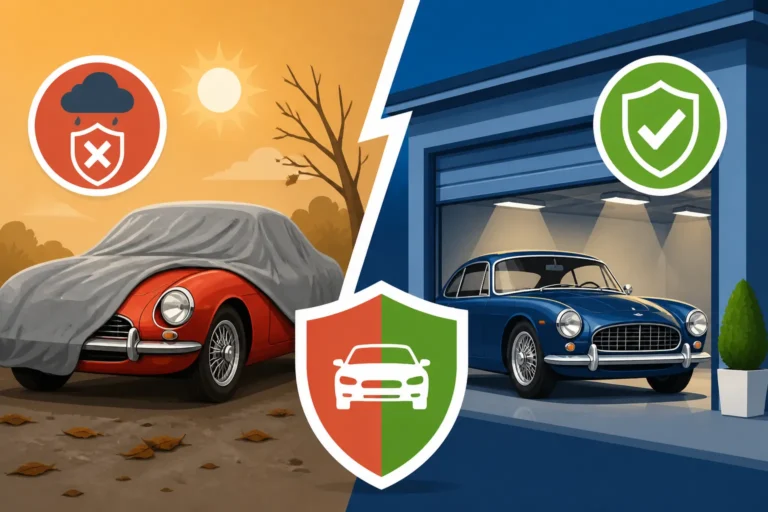
Where and how you store your classic car is another critical factor in determining your insurance premium. Specialty insurers almost universally require that your classic car be stored in a secure, enclosed, and locked facility, such as a private garage. This requirement reflects the reduced risk of theft, vandalism, and environmental damage when a vehicle is not parked on the street or in an open carport.
A dedicated, locked garage significantly reduces the insurer's risk, and this reduction is passed on to you in the form of lower rates. If you can only offer a carport or street parking, you might find it difficult to get a specialty classic car policy, or your premiums will be considerably higher, if available at all. Furthermore, additional security measures, like alarm systems, tracking devices (such as a LoJack system), or even a robust home security system, can sometimes qualify you for further discounts. Understanding Garage Storage Requirement for Classic Cars can help you prepare your space appropriately.
Factors Influencing Classic Car Insurance Costs for Beginners
| Factor | Lowers Premium | Raises Premium |
|---|---|---|
| Vehicle Use | Limited "pleasure use," low annual mileage | Frequent use, higher annual mileage |
| Storage | Secure, locked, private garage | Carport, public storage, street parking |
| Driver's Record | Clean driving history | Accidents, moving violations |
| Vehicle Type | Restored, un-modified, established classic | Highly modified, high-performance, exotic classic |
| Agreed Value | Lower agreed value (while still accurate) | Higher agreed value |
| Security Features | Alarm system, tracking device | No additional security |
| Primary Vehicle Ownership | Owns a separate daily driver | Classic is the only vehicle |
| Deductible | Higher deductible | Lower deductible |
Your Personal Profile and How It Affects Premiums
While the car and its usage are paramount, your personal profile as a driver and collector also plays a role in the insurance equation. Insurers look at various aspects of your history and circumstances to assess the overall risk.
Driving Record and Experience
Just like with regular auto insurance, your driving record is a significant factor in classic car insurance premiums. A clean driving history, free of accidents, speeding tickets, or other moving violations, demonstrates responsible driving behavior. This translates into a lower risk profile for the insurer, and consequently, lower premiums for you. If you have a few minor infractions, they might not disqualify you, but they could lead to slightly higher rates.
However, specialty classic car insurers tend to be more forgiving than standard carriers for minor incidents, especially if they are distant in the past. Their primary concern is that you are a careful, conscientious driver who will treat your classic with the respect it deserves. Serious offenses like DUIs or multiple at-fault accidents, however, can make it challenging to secure a policy or result in substantially higher costs. It’s always a good idea to know how Does Driving Record Affect Classic Car Rates can impact your policy.
Age of the Driver and Household
There's a common myth that young people can't get classic car insurance or that it's prohibitively expensive for them. The reality is more nuanced. While age is a factor, specialty insurers are often more concerned with the experience and responsibility of the driver, as well as the usage of the vehicle. If you're a responsible young adult with a clean driving record and meet the other eligibility criteria (like having a separate daily driver), you can absolutely get classic car insurance.
However, it's true that drivers under 25 or without a significant driving history might face slightly higher premiums, or some insurers might have specific requirements, such as a minimum number of years licensed. The presence of other drivers in your household, particularly young or inexperienced ones, can also affect your rates if they have access to the classic car. Most policies require that anyone driving the classic be listed and meet certain criteria. If you have teenagers in the house, it's crucial to clarify with your insurer who will be driving the classic and how that impacts your policy. For more details on this, check out Minimum Age for Classic Car Insurance Drivers.
Location and Claim History
Where you live can subtly influence your classic car insurance rates. For instance, collectors living in densely populated urban areas, or regions known for higher theft rates, might see slightly higher premiums compared to those in more rural or suburban locations. This is simply a reflection of the statistical risk associated with different geographies. Insurers analyze zip codes for factors like theft rates, accident frequency, and even the prevalence of natural disasters (like hail storms in certain states).
Your personal insurance claim history also plays a role. While most classic car owners go years without filing a claim, a history of multiple claims, even on your daily driver, could signal a higher risk to an insurer. Specialty insurers are looking for low-risk clients, so a history of frequent claims might lead to higher premiums or even difficulty securing coverage from some carriers. The goal is to demonstrate that you are a responsible owner who prioritizes the safety and security of your classic vehicle.
Strategies for New Collectors to Lower Their Classic Car Insurance Premiums
As a beginner, you have several avenues to explore that can help you secure the most competitive rates for your classic car insurance. Being proactive and informed can lead to significant savings.
Choosing the Right Coverage and Deductibles
One of the best ways to manage your premium is by carefully selecting your coverage options and deductible. While you absolutely want comprehensive coverage that includes agreed value, you can tailor other aspects to fit your needs and budget. For instance, considering a slightly higher deductible can often lead to a noticeable decrease in your annual premium. A deductible is the amount you pay out-of-pocket before your insurance coverage kicks in. For a cherished classic that you hope never to make a claim on, opting for a $1,000 or even $2,500 deductible instead of a $500 one can make financial sense.
It's about finding that sweet spot where you feel adequately protected without overpaying. Review all the optional coverages. Do you need trip interruption coverage if you only drive locally? Perhaps. But if you're planning a cross-country tour, it's a must. Understand what each add-on provides and decide if it aligns with your usage. Many beginner collectors choose a robust policy with all the bells and whistles, but it’s always wise to review each one. Dive deeper into how this works by understanding Classic Car Insurance Deductibles Explained.
Discounts and Policy Customization
Specialty classic car insurers offer a variety of discounts that new collectors can leverage. One of the most common and easily accessible is a discount for being a member of a recognized car club or enthusiast organization. Joining local chapters of organizations like the Classic Car Club of America, the Antique Automobile Club of America (AACA), or marque-specific clubs (e.g., a Mustang Owners Club) often qualifies you for a discount with many insurers, including prominent ones like Hagerty. These clubs foster responsible ownership, which insurers appreciate.
Furthermore, if you own multiple classic vehicles (even if you're just starting with two), some insurers offer multi-car collection discounts, bundling them under a single policy. Installing approved anti-theft devices, such as alarms or GPS tracking systems, can also lead to reduced premiums. Don't be shy about asking your insurance provider about all available discounts. Every little bit adds up, and customizing your policy to reflect these factors is a smart move. Explore more ways to save by checking out Classic Car Insurance Discounts Explained.
Working with Specialty Insurers
For new collectors, partnering with a specialty classic car insurance provider is not just a recommendation; it's often a necessity for true protection and competitive rates. Standard auto insurance companies are not structured to properly value or insure classic and collector vehicles. They operate on the ACV model and often don't understand the unique usage patterns and restoration values of these cars. You might get a quote, but the coverage will likely be inadequate and potentially more expensive than a specialty policy.
Companies like Hagerty, Grundy, American Collectors Insurance, and others specialize exclusively in collector vehicles. They understand the nuances of the market, offer agreed value policies as standard, and tailor coverage specifically for collectors. They appreciate that your car is a passion, not just transportation. When comparing options, always seek quotes from these specialized providers. They have the expertise to value your car correctly, offer appropriate coverage, and provide a claims experience that understands the unique nature of classic vehicles. Learning How to Compare Classic Car Insurance Quotes effectively is key to finding the best fit.
Common Mistakes and Misconceptions for First-Time Classic Car Owners
Entering the world of classic car ownership can be a steep learning curve, and unfortunately, many new collectors fall prey to common pitfalls when it comes to insurance. Avoiding these mistakes can save you a lot of headache and heartache down the road.
Assuming Regular Auto Insurance is Sufficient
This is, without a doubt, the most critical and potentially costly mistake a new classic car owner can make. Many assume their existing auto insurance policy, which covers their daily driver, can simply be extended to cover their new classic. While some standard insurers might offer some form of coverage for older vehicles, it almost invariably defaults to Actual Cash Value (ACV). As discussed earlier, this is a recipe for disaster for a classic car.
If your cherished classic, into which you’ve poured time, money, and love, is totaled in an accident or stolen, an ACV policy will only pay out its depreciated market value according to their standard valuation guides. This almost never reflects the true collectible, restored, or sentimental value of your car. You could easily find yourself receiving a payout for a fraction of what the car is actually worth, leaving you with a significant financial loss. Specialty policies, offering agreed value, are designed precisely to prevent this heartbreaking scenario.
Underestimating the Value of the Car
Another common misstep for new collectors is underestimating the true value of their classic when obtaining an insurance quote. This isn't about inflating the value; it's about accurately assessing what your car would cost to replace or what its market value truly is. Factors like a professional restoration, rare options, specific provenance, or even just general market appreciation can significantly increase a classic car's worth beyond a casual estimate.
It's vital to have a clear understanding of your vehicle's agreed value when you set up your policy. For more valuable or highly restored cars, getting a professional appraisal from a qualified classic car appraiser is highly recommended. This documentation provides a credible, third-party assessment of your car's value, which helps establish the agreed value with your insurer and ensures you're adequately covered. For more guidance, read up on How Classic Car Appraisals Work for Insurance.
Neglecting Ongoing Policy Review
Once you’ve secured a classic car insurance policy, it’s easy to set it and forget it. However, classic cars are dynamic assets, and their value can change over time. Neglecting to review your policy regularly, especially your agreed value, is another common mistake. Market values for classics can fluctuate, and if you make significant modifications or complete a major restoration, the value of your car can increase substantially.
If you don't update your agreed value with your insurer to reflect these changes, you risk being underinsured. Imagine investing another $15,000 in a top-tier paint job and engine rebuild, but your policy still reflects the value from before the work was done. In the event of a total loss, your payout would only match the outdated agreed value. Make it a habit to review your policy annually, or whenever significant work is done on your car, to ensure your coverage keeps pace with its evolving value. This ensures you're always fully protected, and you can learn more about how to do this by reading How to Increase Your Agreed Value Over Time.
Disclaimer
The information provided in this article is for general informational purposes only and does not constitute professional financial, insurance, or legal advice. Classic car insurance requirements and costs can vary significantly based on individual circumstances, vehicle specifics, and state regulations. Always consult with a qualified insurance professional to discuss your specific needs and obtain personalized quotes and advice.