Cost to Insure a 1980s Porsche 911
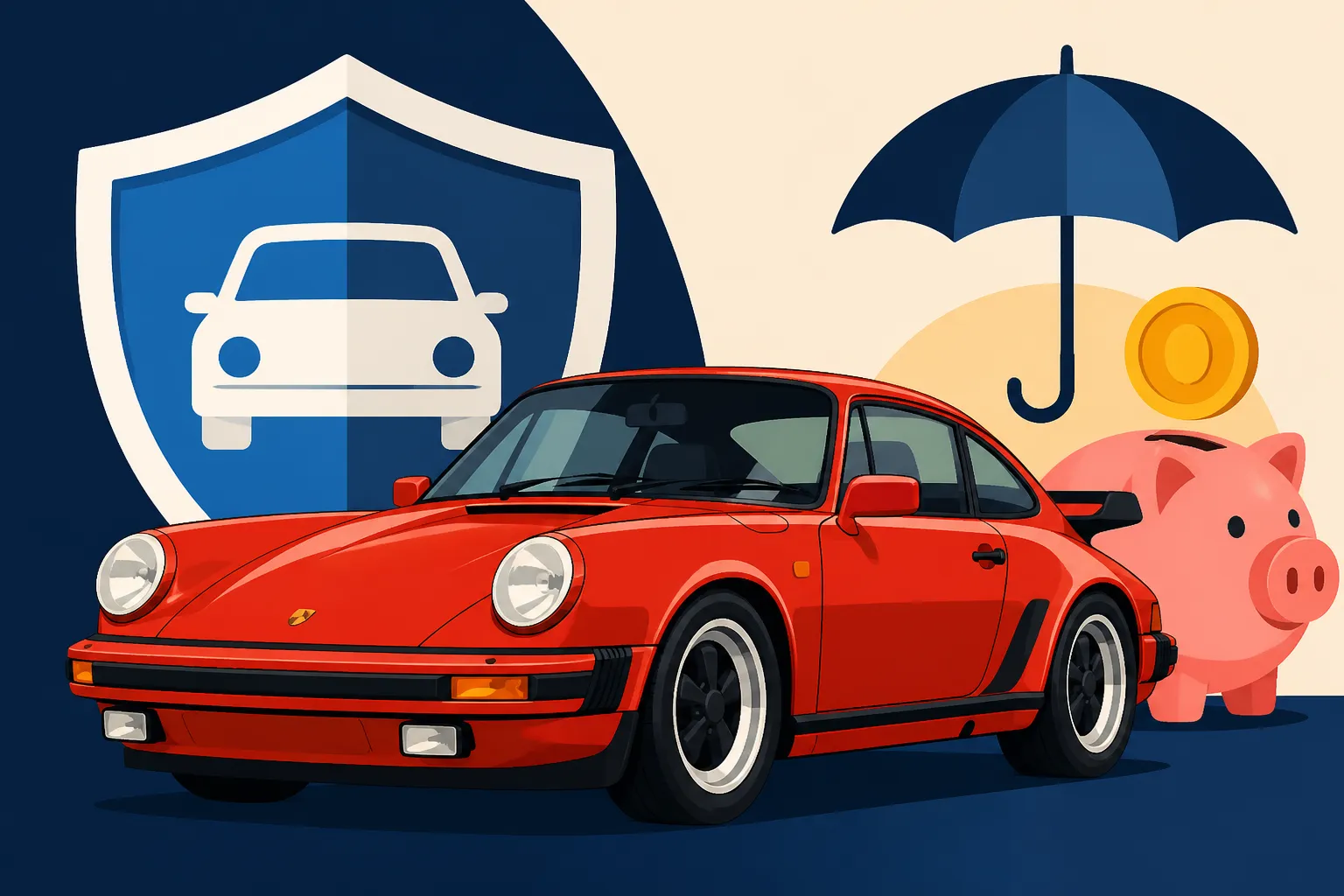
Trying to figure out the insurance cost for your prized 1980s Porsche 911 can feel like navigating a complex German manual – confusing, with a lot of specific details you don't want to miss. Standard auto insurance often falls short, failing to recognize the unique value and limited use of these collector vehicles, leading to either inadequate coverage or unnecessarily high premiums. This comprehensive guide will walk you through all the factors influencing the cost of insuring your vintage Porsche, helping you understand what to expect and how to secure the best policy.
Understanding the Unique Nature of Insuring a 1980s Porsche 911
Insuring a classic like a 1980s Porsche 911 isn't like insuring your modern daily driver. These cars hold a special place in the automotive world, coveted for their engineering, driving dynamics, and often, their increasing market value. This unique status means they require a different approach to insurance, one that recognizes their true worth and how they are typically used.
Why Standard Insurance Falls Short for a Classic Porsche
Standard auto insurance policies are designed for vehicles that depreciate over time, are driven daily, and are frequently exposed to typical road risks. When you try to put a classic Porsche 911 on a regular policy, you'll likely encounter a few problems. First, the policy will value your car based on its Actual Cash Value (ACV), meaning depreciation is factored in. This is a disaster for a classic, which often appreciates. If your beautiful 911 Carrera (G-body or 964 generation) was involved in an accident, a standard policy would likely offer a payout far below what it would actually cost to repair or replace it with a comparable model.
Furthermore, standard policies don't account for the specialized parts, labor, and craftsmanship required to maintain and repair a classic Porsche. Finding a new fender for a 1980s 911 is a vastly different proposition than sourcing one for a 2020 Honda Civic. The expertise needed for repairs, especially for air-cooled engines or specific body panels, is much higher, and regular insurance often won't cover these specialized costs. It's truly a mismatch between the policy type and the asset being insured.
The Advantage of Classic Car Insurance for Your 911
This is where specialty classic car insurance comes into its own. These policies are specifically tailored for collectible vehicles, recognizing their unique value proposition and usage patterns. The cornerstone of classic car insurance is "agreed value" coverage. Instead of depreciating your car, you and the insurer agree on a fixed value for your 1980s Porsche 911 at the beginning of the policy term. If your car is ever deemed a total loss, you receive that agreed-upon amount, no questions asked, no depreciation applied. This is incredibly important for vehicles like the 911, which might be worth anywhere from $40,000 to well over $100,000, depending on the specific model, condition, and modifications.
Beyond agreed value, these policies often offer specialized benefits like coverage for spare parts, car show attendance, roadside assistance with flatbed towing (crucial for preserving classic transmissions), and even coverage for vehicles undergoing restoration. These are benefits you simply won't find with a standard policy and are essential for protecting your investment in a classic Porsche. To dive deeper into how these policies differ, you might want to read about Classic Car Insurance vs Regular Insurance: What's Required.
Key Factors Influencing Your 1980s Porsche 911 Insurance Premiums
The cost to insure your 1980s Porsche 911 isn't a one-size-fits-all number. Several distinct factors come into play, each contributing to the overall premium you’ll pay. Understanding these can help you anticipate costs and potentially find ways to save.
Vehicle Specifics: Model, Condition, and Modifications
The specific model of your 1980s Porsche 911 plays a huge role. Are you insuring a 911 SC, a Carrera 3.2, or a rare 930 Turbo? Each of these models has a different market value, parts availability, and inherent risk profile. A pristine, low-mileage 930 Turbo, for instance, will naturally have a higher agreed value than a driver-quality 911 SC, leading to a higher premium.
The condition of your Porsche is equally critical. A concourse-level restoration with show-winning pedigree will command a much higher agreed value – and thus a higher premium – than a project car that's still rough around the edges. Insurers like Hagerty will assess your car's condition, looking at everything from paint quality to mechanical soundness. Any significant modifications, whether performance enhancements or aesthetic changes, also need to be disclosed. If your 911 has a full backdate kit or a heavily modified engine, that will affect its valuation and potentially its risk, leading to adjusted rates.
Driver Profile and Usage Limitations
Your own driving history, age, and location are standard factors in any insurance policy, and classic car insurance is no exception. A clean driving record with no accidents or major violations will always result in lower premiums. Insurance companies consider responsible drivers to be lower risk. Additionally, your age can sometimes play a role; while classic car insurance generally requires a certain level of driving experience, the specific Minimum Age for Classic Car Insurance Drivers might vary slightly between providers.
However, a major difference with classic car insurance is the expectation of limited use. These policies are designed for hobby vehicles, not daily transportation. Most policies come with mileage limits, often ranging from 1,000 to 5,000 miles per year, reflecting the typical use for pleasure drives, car shows, and club events. If you plan to use your 911 more extensively, you might need to discuss higher mileage tiers, which could increase your premium. You can learn more about How Mileage Limits Affect Cost for classic cars.
Storage and Security Measures
Where and how you store your 1980s Porsche 911 is a significant factor in your insurance cost. Insurers prefer vehicles stored in a secure, enclosed, and locked garage when not in use. This greatly reduces the risk of theft, vandalism, and environmental damage. Parking your classic 911 on the street or in an uncovered carport, even occasionally, might make it ineligible for a specialty policy or result in much higher rates. Many policies have a strict Garage Storage Requirement for Classic Cars.
Beyond just a locked garage, additional security measures can sometimes lead to discounts. This could include alarm systems, GPS tracking devices, or even a professionally monitored security system for your garage. The goal is to demonstrate to the insurer that you are taking all reasonable steps to protect your valuable asset.
Agreed Value and Coverage Choices
As mentioned, agreed value is central to classic car insurance. The higher the agreed value for your 1980s Porsche 911, the higher your premium will be, because the insurer is on the hook for a larger payout in the event of a total loss. This value is often determined through appraisals, market research, and sometimes even photos of your vehicle. It’s crucial to accurately assess your car's value; for more on this, check out How Agreed Value Affects Premiums.
Beyond the agreed value, the specific types of coverage you choose will also impact the cost. While liability coverage is a legal requirement, you'll also want comprehensive and collision coverage to protect your investment. Optional add-ons, such as roadside assistance tailored for classics (flatbed towing is essential), spare parts coverage, or coverage for a vehicle under restoration, will add to your premium but provide crucial protection. Each of these choices allows you to tailor the policy to your specific needs and usage. You might also be interested in understanding the nuances between Agreed Value vs Stated Value vs Actual Cash Value.
Typical Costs and What to Expect for a 1980s Porsche 911 Policy
When you’re considering bringing home a 1980s Porsche 911, one of the first questions is always about the running costs, and insurance is a big part of that. While it's impossible to give an exact number without a specific quote, we can explore the general range and the components that make up the typical cost for these iconic vehicles.
General Range of Annual Premiums
For a 1980s Porsche 911, you can generally expect annual classic car insurance premiums to range from $400 to $1,200 per year, though this can go higher for very rare models, extremely high agreed values, or specific driver profiles. This is significantly less than what a standard auto policy would cost for a modern performance car, primarily because of the limited use restrictions and the careful ownership typically associated with classic cars. For instance, a well-maintained 1985 Porsche 911 Carrera 3.2 Coupe, with an agreed value of $80,000 and driven around 2,500 miles annually by an experienced collector, might see premiums in the $600-$900 range. However, a meticulously restored 1989 930 Turbo Targa with an agreed value approaching $200,000 could easily push premiums beyond $1,500 annually.
This range is just a guideline, of course. Factors like your geographic location, where the car is garaged in, say, Los Angeles versus rural Kansas, and your personal driving history will all play a part in the final figure. Remember that specialist insurers like Hagerty are designed to offer these more favorable rates because they understand the low-risk nature of classic car ownership.
How Agreed Value Directly Impacts Your Premium
The agreed value is arguably the most significant factor in determining your premium. Simply put, the higher the agreed value of your 1980s Porsche 911, the more the insurance company stands to lose in the event of a total loss, and thus, the higher your premium will be.
Let's look at an example:
| Model | Agreed Value (Approx.) | Estimated Annual Premium Range |
|---|---|---|
| 1980 Porsche 911 SC (Good) | $50,000 – $65,000 | $400 – $600 |
| 1985 Porsche 911 Carrera 3.2 (Excellent) | $75,000 – $95,000 | $600 – $950 |
| 1989 Porsche 930 Turbo (Pristine) | $150,000 – $250,000 | $1,000 – $2,000+ |
Note: These are estimates based on general market conditions and typical classic car insurance criteria for an experienced driver with a clean record and secure garage storage.
It's crucial to have an accurate agreed value. Over-insuring means you're paying too much in premiums, while under-insuring could leave you with a significant financial shortfall if your beloved 911 is totaled. Many collectors work with appraisers or use reputable valuation tools, often provided by companies like Hagerty, to determine an appropriate agreed value. This is a critical step in getting the right coverage at a fair price, and it's well worth exploring How Classic Car Appraisals Work for Insurance to understand the process.
Comparing Quotes from Specialty Insurers
The best way to get an accurate cost for your 1980s Porsche 911 is to obtain quotes from several reputable specialty classic car insurance providers. Companies like Hagerty, Grundy, American Collectors Insurance, and American Modern are leaders in this niche. They each have slightly different underwriting criteria, policy features, and pricing structures, so comparing them is essential.
When requesting quotes, be prepared to provide detailed information about your specific Porsche 911 model (e.g., year, trim level, engine type), its condition, mileage, storage arrangements, and your driving history. Many insurers allow you to get an initial quote online, which can be a quick way to compare rough figures. However, for a truly accurate quote, speaking with an agent who specializes in classic cars is highly recommended. They can help you understand the nuances of coverage, identify potential discounts, and ensure you're getting the right protection for your unique vehicle. For a broader look, check out our guide on the Best Classic Car Insurance Companies.
Strategies to Potentially Lower Your 1980s Porsche 911 Insurance Costs
While insuring a classic 1980s Porsche 911 is generally more affordable than a comparable modern sports car, there are still smart ways to potentially reduce your premiums without compromising on essential coverage. Every dollar saved on insurance is another dollar you can put toward maintenance, upgrades, or even another classic!
Maximizing Discounts and Bundling Options
Classic car insurers, much like standard providers, offer a range of discounts that can help chip away at your premium. One common discount is for being a member of a recognized car club, such as the Porsche Club of America. These clubs often promote responsible car ownership and safe driving, which insurers appreciate. Make sure to ask if your insurer offers a Car Club Membership Discounts when you get a quote.
Another significant saving can come from insuring multiple classic vehicles with the same provider. If you're a true enthusiast and have a collection that includes your 1980s 911 alongside, say, a vintage Mercedes or a muscle car, a multi-car collector policy can often be more cost-effective than insuring each vehicle separately. Many specialty insurers are set up to handle these collections seamlessly. Furthermore, some specialty providers might offer discounts if you also have your regular auto insurance or even homeowners insurance with an affiliated standard carrier, so always inquire about bundling.
Adjusting Mileage Tiers and Deductibles
Classic car insurance policies are built around the concept of limited use. Most policies will have different mileage tiers (e.g., 1,000, 2,500, or 5,000 miles per year). Carefully consider how much you realistically drive your 1980s Porsche 911. If you primarily take it out for occasional weekend cruises and car shows, you might qualify for a lower mileage tier, which will reduce your premium. Don't overestimate your mileage – an honest assessment can save you money. However, be realistic; exceeding your mileage limit could void your coverage in a claim situation. For more detailed information, look into How Mileage Tiers Work for Classic Cars.
Your deductible choice also directly impacts your premium. A higher deductible means you'll pay more out-of-pocket in the event of a claim, but in return, your annual premium will be lower. For a car like a 1980s Porsche 911, many owners choose a higher deductible (e.g., $1,000 or $2,500) because they are confident in their careful driving habits and the car's limited exposure to risk. It’s a calculated risk versus reward decision that many collectors make to save on annual costs.
Ensuring Proper Storage and Security
As previously discussed, secure storage is a fundamental requirement for classic car insurance and a primary factor in risk assessment. Keeping your 1980s Porsche 911 in a locked, private garage not only makes you eligible for specialty insurance but also typically results in lower premiums. Insurers want to know your car is safe from theft, vandalism, and environmental damage when it's not being driven.
Beyond the basic garage requirement, consider adding extra security features. An alarm system, a vehicle tracking device (like a LoJack or a GPS tracker), or even a robust security system for your garage can sometimes lead to additional discounts. These measures demonstrate to the insurer that you are a responsible owner actively protecting your investment, which can translate into further savings. Companies like Hagerty often appreciate these proactive steps. This topic is covered in more detail in How Storage Affects Classic Car Rates.
Maintaining a Clean Driving Record and Seeking Expert Advice
While it might seem obvious for any type of auto insurance, a clean driving record is paramount for classic car insurance. Minor infractions, and especially major ones, can significantly increase your rates or even make you ineligible for certain policies. Insurers view drivers with spotless records as lower risk, and this is reflected in more favorable premiums. It's just another reason to drive your 1980s Porsche 911 with the care and respect it deserves.
Finally, don't underestimate the value of seeking advice from an independent insurance agent who specializes in classic cars. These agents often work with multiple specialty carriers and can help you navigate the complexities of different policies, compare quotes, and identify all available discounts that might apply to your specific situation and your 1980s Porsche 911. They can offer insights into what coverage you truly need, avoiding both under-insuring and overpaying. You can find comprehensive tips on overall savings in our guide on How to Save on Classic Car Insurance.
Disclaimer
Please remember that insurance policies and their terms can vary widely. The information provided in this article is for general informational purposes only and does not constitute financial or insurance advice. Always consult with a qualified insurance professional to discuss your specific needs and obtain personalized quotes for your 1980s Porsche 911.