How to Compare Agreed Value Offers
Navigating the world of classic car insurance can feel like deciphering an ancient map, especially when you start diving into the nuances of "agreed value." Many of us, myself included, have spent countless hours poring over policy documents, trying to figure out if the offer on the table truly protects our prized possession. The frustration often stems from not knowing what to look for beyond the big number, and feeling unsure if you’re making the right choice. This guide is here to untangle that knot, showing you exactly how to compare agreed value offers so you can insure your classic with confidence.
Understanding the Core of Agreed Value Insurance
When it comes to insuring your beloved classic, understanding "agreed value" is paramount. It’s not just another insurance term; it's the bedrock of proper protection for a vehicle that often holds more sentimental than mere monetary worth. Unlike a regular daily driver, a classic car appreciates in value, or at least holds its unique market position, rather than depreciating instantly off the lot. This fundamental difference is why traditional insurance models often fall short.
What Agreed Value Truly Means for Your Classic
At its heart, agreed value is a pre-determined, fixed amount that you and your insurance provider agree upon as the true value of your classic vehicle at the beginning of the policy term. This isn't some ballpark estimate; it's a specific dollar figure that, should your classic suffer a total loss, the insurance company promises to pay out, minus your deductible. It removes the guesswork, the haggling, and the potential heartbreak that comes with standard "actual cash value" or "stated value" policies. With actual cash value, the insurer typically pays out the market value at the time of the loss, which, for a classic, might be far less than what you believe it's worth or what you've invested in it. Stated value policies, while sounding similar, often allow the insurer to pay the lesser of the stated value or the actual cash value at the time of loss, leaving you vulnerable. This distinction is critical and something every classic car owner should fully grasp.
Imagine you've poured thousands into restoring a vintage Chevrolet Bel Air, painstakingly sourcing original parts and investing countless hours of labor. Under an agreed value policy, if that car is totaled, you know exactly how much you'll receive to either replace it or recover your investment. This certainty provides immense peace of mind, allowing you to enjoy your classic without constant worry about its financial protection. It acknowledges the unique, often irreplaceable nature of these vehicles, moving beyond a simple depreciation curve. You can learn more about this by reading our in-depth article on Agreed Value Coverage Explained.
Why Agreed Value is Crucial for Collector Vehicles
Collector vehicles, by their very nature, are distinct from the everyday commuter car. Their value isn't solely determined by age and mileage, but by factors like provenance, originality, restoration quality, rarity, and market demand. A standard auto policy, designed for mass-produced vehicles that lose value over time, simply isn't equipped to assess and protect these unique assets accurately. Without an agreed value policy, you risk being severely underinsured, meaning a total loss could leave you with a payout that barely covers a fraction of your car's true worth or the effort you've put into it.
Think about a rare muscle car, like a 1970 Plymouth Hemi 'Cuda. Its market value can fluctuate, but it's generally on an upward trend. If you have a standard policy, the insurer might look at its age and mileage, apply a depreciation formula, and offer you a fraction of what a collector would pay. An agreed value policy, however, takes into account the vehicle's specific attributes, its documented history, and its position in the collector market. It ensures that the emotional and financial investment you've made is recognized and protected. For more on this, check out Why Agreed Value Matters for Classics. It's about preserving not just an asset, but a piece of history and a passion.
Key Components of an Agreed Value Offer
When you receive agreed value offers, it's easy to fixate on the big, bold "agreed value" number. But let's be realistic: a policy is far more than just that single figure. There are several other crucial components that can significantly impact your actual coverage, your out-of-pocket costs, and your overall experience if you ever need to file a claim. Overlooking these details can lead to unexpected surprises down the road, turning what you thought was a great deal into a less-than-ideal situation.
The Stated Agreed Value Amount
This is the cornerstone of your policy. It's the maximum amount your insurer will pay out in the event of a total loss, period. This figure should be meticulously determined, ideally with the help of a professional appraisal, recent sales data, and your own detailed records of restoration and parts. Don't just pick a number out of thin air or let the insurer dictate it without your input. It needs to reflect the current, accurate market value of your specific vehicle, considering its condition, modifications, and any unique features.
For instance, if you own a 1965 Ford Mustang convertible with a numbers-matching 289 V8 and a concours-level restoration, its agreed value should be significantly higher than a similar-year Mustang that's a driver-quality car with a swapped engine. Always ensure you have documentation to support the agreed value you propose or accept. Some insurers, like Hagerty, have excellent valuation tools and resources to help you establish a realistic figure. Understanding How Agreed Value Is Determined is key here, as it's not a static number and should be revisited, especially after major restorations or market shifts.
Deductibles and Their Impact
Just like with regular auto insurance, agreed value policies come with deductibles. This is the amount you're responsible for paying out of pocket before your insurance coverage kicks in for a covered loss. Deductibles can range from $0 to $2,500 or more, and they have a direct impact on your premium. A higher deductible typically means a lower premium, and vice-versa.
The trick is finding the right balance for your budget and risk tolerance. For a classic car that you rarely drive and keep meticulously garaged, a higher deductible might be a sensible way to lower your annual premium, especially if you have an emergency fund set aside. However, if you take your classic on frequent tours or to many shows, increasing its exposure, a lower deductible might offer more immediate financial protection in case of an incident. Always compare the deductible options presented in each offer and consider your personal financial situation and how you use your classic. Remember, even with an agreed value policy, that deductible will come out of your guaranteed payout.
Policy Limitations and Exclusions
This is where the fine print truly matters, and it's often overlooked. Every agreed value policy will have specific limitations and exclusions that define what is and isn't covered. For example, some policies might have strict mileage limitations—say, 2,500 or 5,000 miles per year. Exceeding this limit, even unintentionally, could jeopardize your coverage in the event of a claim. Other common limitations include geographic restrictions (e.g., coverage only within the continental U.S. and Canada), requirements for garaging (e.g., must be stored in a locked, private garage), or restrictions on competitive driving (e.g., no coverage for track days or racing).
Exclusions can be even more impactful. Does the policy exclude coverage for damage during transportation to a show if it's not on a specific type of trailer? Are certain types of modifications excluded? Does it cover spare parts or tools? What about if your vehicle is undergoing restoration? Always ask for clarification on these points. A policy that looks great on paper with a high agreed value might have so many exclusions that it doesn't actually provide the comprehensive protection you need. Our article on Classic Car Insurance Exclusions to Know delves deeper into these potential pitfalls. Don't just assume; read every word or ask your agent specific questions about how you intend to use and store your vehicle.
Comparing Agreed Value Offers from Different Insurers
It's tempting to simply pick the insurance company that offers the highest agreed value or the lowest premium. But that's like judging a book solely by its cover. A truly informed comparison requires looking much deeper than the surface numbers. You need to scrutinize what's actually under the hood of each policy to ensure it aligns with your specific needs and how you plan to enjoy your classic.
Beyond the Face Value: Hidden Differences
While the agreed value figure is paramount, don't let it blind you to other critical policy elements that can vary significantly between insurers. Consider the specific coverages included as standard. Does one offer roadside assistance specifically designed for classic cars (think flatbed towing, not a hook and chain)? Does another include trip interruption coverage if your classic breaks down hundreds of miles from home? What about coverage for spare parts or automobilia? These are often overlooked but can add immense value and peace of mind.
Furthermore, look at the insurer's requirements for valuation. Does one demand a certified appraisal every year, while another is content with photos and receipts, or perhaps leans on an internal valuation tool like Hagerty's? These differences can impact your time and cost. Also, pay attention to the flexibility in mileage limits. If you plan a cross-country tour, a 1,000-mile annual limit from one provider versus an unlimited or higher-tier option from another could be a deal-breaker. Our guide on How to Compare Classic Car Insurance Quotes offers a broader perspective on evaluating policies.
What to Ask About Claims Processes
This is arguably one of the most important, yet least considered, aspects until disaster strikes. A smooth, transparent, and fair claims process can make all the difference when your classic is damaged or stolen. Start by asking about the insurer's reputation for handling classic car claims. Do they have adjusters specifically trained in classic vehicles, who understand the unique nature of restoration costs and rare parts? Or will a general adjuster, accustomed to modern cars, assess your classic?
Inquire about the typical timeline for claims resolution. How quickly do they respond? What is their process for valuing repairs or total losses? Are they known for disputing agreed values or for honoring their commitment? Read online reviews, check with classic car clubs, and even ask for testimonials if possible. A cheap policy is no bargain if you have to fight tooth and nail to get a fair payout when you need it most. This due diligence can save you immeasurable stress and potential financial loss in the long run.
Analyzing Additional Coverage Options
Many specialty classic car insurers offer a suite of additional coverages, or endorsements, that can dramatically enhance your protection. These aren't always standard and can vary widely in cost and availability. For instance, "Restoration Coverage for Classic Cars" can be invaluable if your vehicle is a work in progress, covering the increasing value as you invest in parts and labor. "Inflation Guard Coverage for Classic Cars" is another smart option, automatically increasing your agreed value by a small percentage each year to keep pace with rising market values without requiring a new appraisal.
Consider coverage for tools and equipment used in restoration, or for a collection of automobilia if you have significant investment there. Some policies offer "Cherished Salvage" options, allowing you to retain the salvage of your totaled vehicle, which can be crucial for rare parts or sentimental value. These add-ons, while increasing your premium slightly, can offer tailored protection that standard policies or even basic agreed value policies simply don't. Explore all the available "Classic Car Insurance Add-Ons and Endorsements" to ensure you're getting comprehensive protection, not just the basics.
Factors Influencing Your Agreed Value
The agreed value number isn't pulled from thin air; it's a carefully calculated figure that takes into account numerous factors specific to your classic car and how you use it. Understanding these influences can empower you to not only negotiate a fair agreed value but also to maintain it accurately over time.
Vehicle Condition, Rarity, and Documentation
The physical state of your classic is paramount. A car in "concours" or "show-quality" condition, meaning it’s meticulously restored or exceptionally preserved, will naturally command a higher agreed value than a "driver-quality" car with some flaws, or a "project car" needing extensive work. Insurers look at the overall aesthetic, mechanical soundness, and originality of the vehicle. Is the paint perfect? Is the engine bay spotless? Are all systems functioning correctly? These details directly correlate to its market value.
Rarity also plays a huge role. A limited-production model, a unique factory option combination, or a car with significant historical provenance (e.g., owned by a celebrity, a race winner) will hold a higher value. Documentation is your best friend here. Keep meticulous records: appraisal reports, restoration receipts, photos of the build process, awards won, maintenance logs, and any history proving its rarity or significance. This evidence provides concrete justification for your proposed agreed value and helps companies like Hagerty validate the figure. Without it, you’re just making a claim, and they’re likely to offer a more conservative valuation. For tips on how to properly document your car's value, see How to Value Your Classic Car for Insurance.
Storage, Usage, and Driver Profile
Beyond the car itself, how and where you keep and drive your classic also significantly impacts the agreed value and overall premium. Insurers generally prefer vehicles to be stored in a locked, private garage, offering protection from theft, vandalism, and the elements. Storing your classic on the street or in a carport may lead to higher premiums or even make you ineligible for some specialty policies, as it increases the risk of damage or theft. Many policies have specific Garage Storage Requirement for Classic Cars.
Your usage patterns are another critical factor. Classic car insurance is typically designed for "pleasure use" or "limited use," meaning occasional driving for shows, club events, and leisure cruises, not daily commuting. The annual mileage limit you choose (e.g., 1,000, 2,500, 5,000 miles) directly influences the risk profile and, consequently, the premium and potentially the agreed value flexibility. Exceeding these limits could void your coverage.
Finally, the driver's profile matters. Experienced drivers with clean records generally receive better rates. Some specialty insurers may have minimum age requirements for policyholders or require that all household drivers of the classic also have clean driving histories. They might also look at your experience owning and maintaining classic cars. All these elements collectively contribute to the insurer's assessment of risk and, subsequently, the agreed value they are willing to offer and the premium attached to it. It’s a holistic view of both the vehicle and its caretaker. You can explore this further in What Affects Classic Car Insurance Rates.
Practical Steps for Evaluating Offers
Comparing agreed value offers isn't a passive exercise; it requires a structured approach to ensure you're making the best decision for your classic. With multiple insurers, varying terms, and different price points, it's easy to get overwhelmed. A systematic comparison will help you see through the noise and focus on what truly matters.
Creating a Side-by-Side Comparison
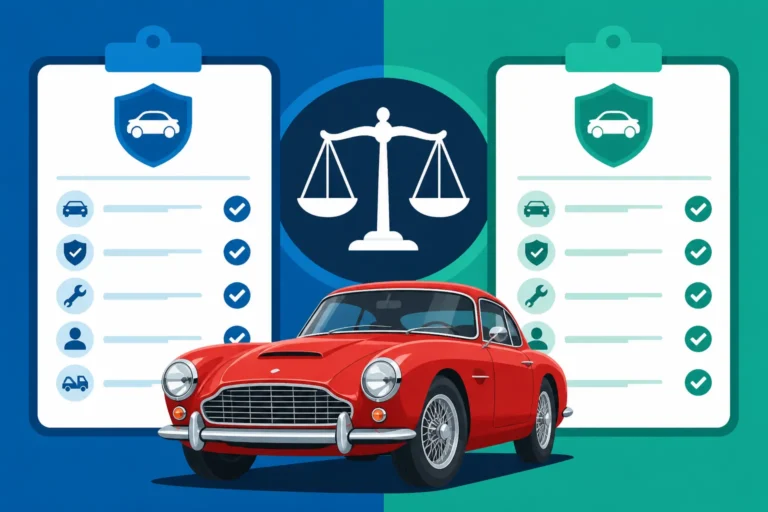
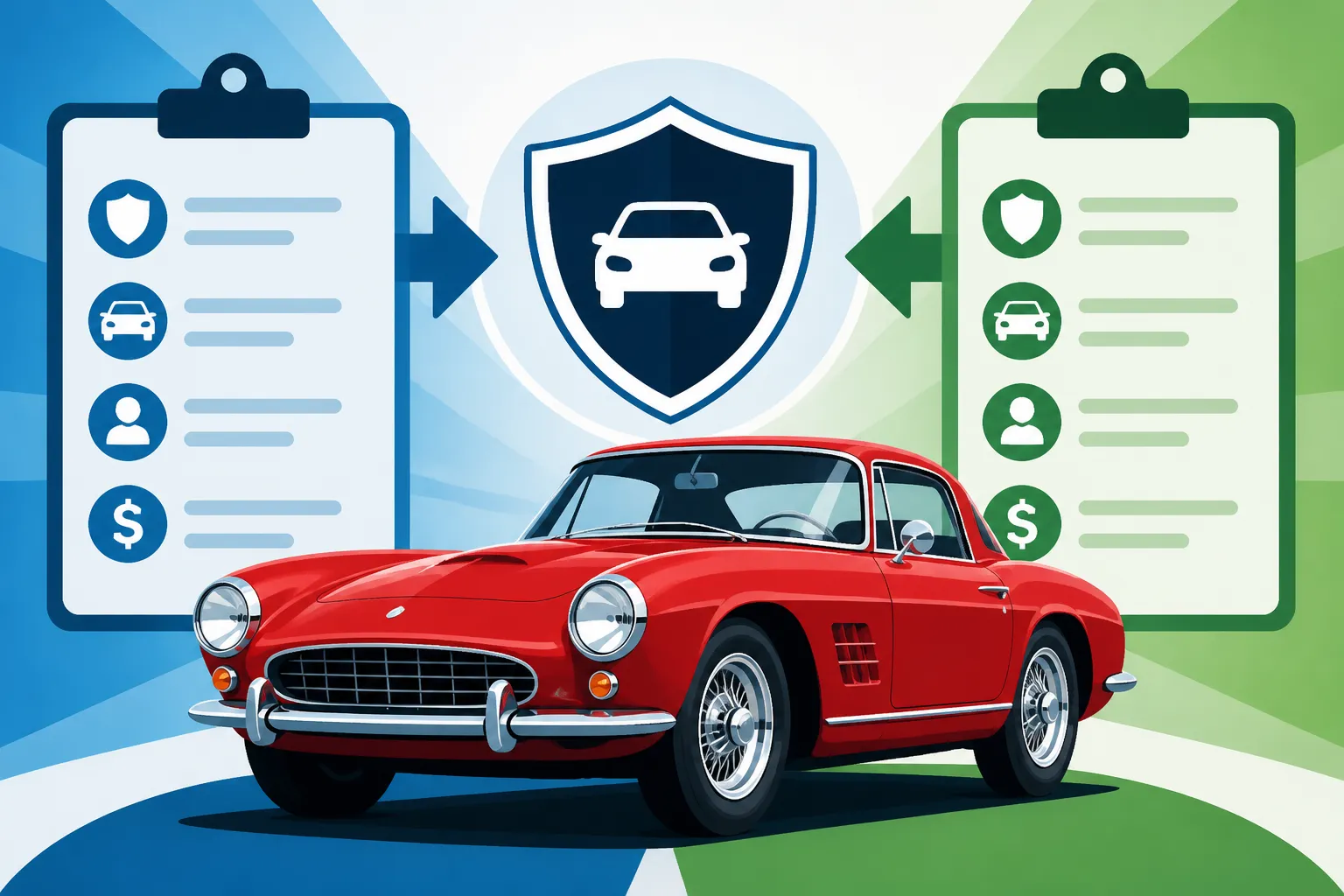
The most effective way to compare offers is to lay them out side-by-side. Don't rely on memory or scattered notes. Create a spreadsheet or a simple table that lists all the key components of each offer. This allows for a direct, objective comparison.
Here’s a template you might use:
| Feature/Company | Insurer A | Insurer B | Insurer C |
|---|---|---|---|
| Agreed Value Amount | $50,000 | $52,000 | $48,000 |
| Annual Premium | $450 | $500 | $420 |
| Deductible | $500 | $1,000 | $250 |
| Mileage Limit | 2,500 miles | Unlimited | 1,000 miles |
| Restoration Coverage | Yes (up to $5k) | No | Yes (full value increase) |
| Spare Parts Coverage | $1,000 | $500 | No |
| Roadside Assistance | Flatbed Only | Standard Towing | Optional Add-on |
| Inflation Guard | 2% per year | No | 3% per year |
| Storage Requirement | Locked Garage | Secured Storage | Private Garage |
| Claims Reputation | Excellent | Good | Fair |
| Agent Accessibility | Dedicated | Online/Call Center | Local Agent |
Fill this out for every quote you receive, being as specific as possible. This visual comparison will immediately highlight strengths and weaknesses, making it easier to identify the best overall value, not just the cheapest price. For example, Insurer C might have the lowest premium and deductible, but if its mileage limit is too restrictive for your plans, or it lacks crucial restoration coverage, it might not be the right fit despite the lower upfront cost. Ensure you understand what is included in each category; for instance, "Restoration Coverage" from one insurer might mean automatic increases with receipts, while another offers a fixed, lower amount.
Seeking Professional Guidance or Second Opinions
Even with a detailed side-by-side comparison, some aspects of insurance policies can be complex or unclear. This is where professional guidance becomes invaluable. Don't hesitate to reach out to an independent insurance agent who specializes in classic cars. These agents often work with multiple specialty carriers like Grundy, J.C. Taylor, American Collectors, or Hagerty and can provide unbiased advice based on your specific needs. They can explain nuanced policy language, point out potential coverage gaps, and even help you negotiate better terms or a higher agreed value, armed with their industry knowledge.
You might also consider joining a local classic car club or online enthusiast forums. Fellow collectors often have years of experience with different insurers and claims processes, and their anecdotes can offer real-world insights that brochures won't. They can share experiences about which companies are genuinely collector-friendly and which ones are more challenging to deal with. This collective wisdom can be a powerful tool in your decision-making process. Remember, a classic car is an investment of both money and passion, so taking the extra step to get expert advice or a second opinion is always a wise move.
Maximizing Your Agreed Value and Coverage
Once you've done your due diligence and identified potential agreed value offers, your work isn't quite finished. There are proactive steps you can take to ensure you're getting the most favorable agreed value and the most comprehensive coverage possible. It's about presenting your car and your commitment to it in the best possible light to your insurer.
Documenting Your Classic's Value Accurately
The agreed value is only as strong as the evidence supporting it. To maximize your agreed value offer, you need to provide meticulous and thorough documentation of your classic's condition, history, and any investments made. This isn't just about receipts; it's about telling a comprehensive story of your vehicle's worth.
Start with a professional, independent appraisal. This is often the gold standard for establishing an initial agreed value. An experienced appraiser understands the nuances of the classic car market and can provide an unbiased, detailed report that insurers respect. Beyond the appraisal, gather all service records, restoration invoices, and receipts for significant parts. Date-stamped photographs or videos documenting the restoration process, before-and-after shots, and detailed images of unique features or modifications are incredibly powerful. If your car has won awards at shows, include those certificates. If it has documented provenance, such as original build sheets, ownership history, or even famous previous owners, compile that as well. This robust portfolio justifies your desired agreed value and makes it much easier for the insurer to approve it. Keep in mind that for many companies, including Hagerty, a thorough understanding of your vehicle's specific attributes is key to their valuation tools.
Leveraging Discounts and Policy Adjustments
Classic car insurers, especially specialty providers, offer various discounts and policy adjustments that can significantly reduce your premium without compromising your agreed value. Don't leave money on the table; always ask what discounts you qualify for.
One common discount is for "multi-car collector policies," where you insure several classics with the same provider. This often leads to savings across your entire collection. Many insurers also offer discounts for car club memberships – belonging to organizations like the Antique Automobile Club of America (AACA) or a specific marque club (e.g., Porsche Club of America) can show your commitment to the hobby. Improved security measures, such as a monitored alarm system or specialized garage security, can also earn you a break on your premium. If you opt for a higher deductible, that will also lower your premium, although it means more out-of-pocket in the event of a claim. Discussing your annual mileage needs accurately is another way to optimize. If you genuinely only drive your classic 500 miles a year, don't default to a 2,500-mile policy; choosing a lower mileage tier can reduce your costs. Lastly, maintaining a clean driving record for all household drivers is paramount, as tickets or accidents can negatively impact your rates. Taking the time to understand and apply these adjustments can lead to substantial savings.
When to Revisit Your Agreed Value Offer
The value of a classic car isn't static. It can fluctuate due to market trends, significant restoration work, or even general economic shifts. Therefore, your agreed value offer shouldn't be a "set it and forget it" item. Regularly reviewing and potentially adjusting your policy is crucial to ensure your beloved classic remains adequately protected.
After Significant Restorations or Modifications
Undertaking a major restoration or adding significant modifications to your classic car is perhaps the most obvious reason to revisit your agreed value. The moment you start investing substantial time, money, and rare parts into your vehicle, its market value often increases dramatically. If your current agreed value policy doesn't reflect these enhancements, you risk being severely underinsured if a loss occurs.
For instance, if you spent two years and $30,000 on a rotisserie restoration of your 1969 Camaro, and your agreed value was set before that work began, your policy is now lagging behind your car’s actual worth. You need to contact your insurer, provide all new documentation (receipts, photos, appraisal updates), and request an adjustment to your agreed value. Many specialty insurers offer specific "Restoration Coverage for Classic Cars" as an add-on, which allows the agreed value to increase as you submit receipts for parts and labor during the restoration process, preventing coverage gaps. Don't wait until the project is 100% complete; proactive communication with your insurer throughout the process ensures continuous, appropriate coverage. Our guide on When to Update Your Classic Car's Agreed Value provides more in-depth advice on this.
Changes in Market Value or Rarity
The classic car market is dynamic, influenced by trends, auction results, and collector demand. What was a desirable classic five years ago might be even more sought after today, and its value could have climbed significantly. Conversely, some segments might see plateaus or even slight dips. Keeping an eye on market trends is crucial for ensuring your agreed value keeps pace.
Follow major auction results, check classic car valuation guides (like those offered by Hagerty, NADA, or ClassicCars.com), and stay informed through collector publications. If you notice that similar cars to yours are consistently selling for higher prices than your current agreed value, it's time to reach out to your insurer. Provide them with this market data and any new appraisals. Some policies include "Inflation Guard Coverage," which automatically adjusts your agreed value by a small percentage each year to account for general market appreciation. While helpful, it might not fully capture dramatic spikes in value for rare or highly desirable models. Proactively monitoring the market ensures your policy reflects the current reality of your classic's worth.
Disclaimer
Please remember that this article provides general information about classic car insurance and agreed value offers. Insurance policies and requirements can vary significantly based on your specific vehicle, location, and individual circumstances. It is always recommended to consult directly with a qualified insurance professional or agent to discuss your specific needs and obtain personalized advice and quotes. This content is not intended as a substitute for professional financial or insurance advice.