How to Insure a Gifted Classic Car
Receiving a gifted classic car, whether it's a beloved family heirloom or a thoughtful present from a friend, is an incredibly special moment. But amidst the excitement, a common challenge quickly surfaces: how do you properly insure something you didn't technically "buy"? Without a traditional purchase receipt or established market value from a sale, figuring out the right insurance can feel like navigating a maze. This comprehensive guide will walk you through everything you need to know about insuring a gifted classic car, ensuring your cherished new possession is protected with the right coverage from day one.
Understanding the Unique Nature of a Gifted Classic Car
When a classic car comes into your possession as a gift, it immediately sets it apart from a vehicle you might purchase. This distinction carries significant weight when it comes to insurance, particularly in how ownership is established and how the vehicle's value is determined for coverage purposes. It’s not just about getting keys; it's about formally transferring a piece of automotive history.
Why "Gifted" Changes Things for Insurance
Most insurance policies are built around the premise of a transaction – a clear buyer and seller, and a documented purchase price. For a gifted vehicle, this foundation is missing. You don't have a bill of sale that reflects a monetary exchange, which means establishing ownership and, more critically, the vehicle's insurable value requires a different approach. Insurers need to be confident that you are the rightful owner and that the value you're requesting coverage for is legitimate, not just an arbitrary number. If the car was a genuine gift, a $0 bill of sale or a formal gift letter becomes your primary document, which might seem unusual to a standard insurance agent.
This lack of a traditional paper trail can sometimes confuse mainstream insurance providers who are accustomed to modern vehicle transactions. They might struggle with how to assign a value to the vehicle without a recent sales record. This is precisely why specialty classic car insurers are so vital in these situations; they understand these nuances implicitly. They know that a classic car's value isn't always tied to a recent sale price and that gifts are a common way these cherished vehicles change hands among enthusiasts.
Establishing Ownership Beyond a Simple Handshake
Even if the car was gifted by a close family member or friend, a handshake simply isn't enough to satisfy legal and insurance requirements. Formal transfer of ownership is absolutely non-negotiable. This process typically involves a clear title transfer, which can vary slightly from state to state. For instance, if you've received a classic from a relative in California and you reside in Arizona, you'll need to navigate the specific titling procedures for both states to ensure a smooth transition. Without a properly transferred title, you won't be able to register the car in your name, which in turn means you can't legally insure it or drive it on public roads.
The donor of the car must sign over the title to you, often in front of a notary public, depending on state regulations. Some states might also require a formal "gift letter" or a specific section on the title that indicates the vehicle was gifted, rather than sold. This documentation ensures there’s a clear legal record of the ownership change. Ignoring this step can lead to significant headaches down the road, from registration delays to potential issues if you ever need to file a claim. Imagine trying to prove ownership to an insurance company after an accident without the proper title in your name – it would be a bureaucratic nightmare. Taking the time to get the title right upfront saves a world of trouble later on.
Essential Documentation for Insuring a Gifted Classic
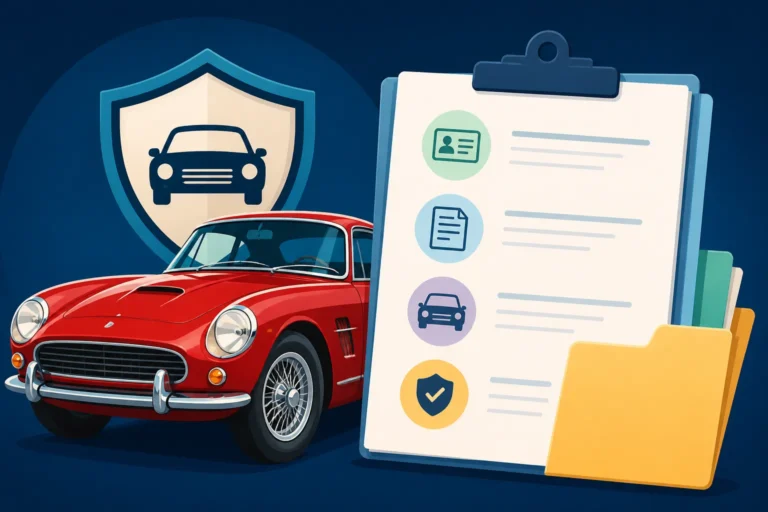
Insuring any classic car requires a specific set of documents, but for a gifted vehicle, some of these pieces of paper take on even greater importance. Since there's no traditional sales receipt to lean on, you'll need to be meticulous in providing clear proof of ownership and an accurate valuation.
The Critical Role of a Clear Title
A clean and properly transferred title is the bedrock of insuring any vehicle, especially a gifted classic. The title serves as definitive proof that you are the legal owner of the car. Without it, or with any discrepancies, you'll hit a major roadblock when trying to secure insurance and registration. For gifted vehicles, this means ensuring the previous owner has correctly signed over the title to you. Make sure all names are spelled correctly, and any necessary odometer statements or release of liability sections are completed.
Problems can arise if the title is lost, damaged, or if it carries a "salvage" or "branded" designation without clear documentation of its repair and current condition. While some specialty insurers might cover a Salvage Title Classic Car Insurance Rules under specific circumstances, it adds another layer of complexity. If the donor claims the title is lost, they will need to apply for a duplicate title in their name before they can legally transfer it to you. This might delay your ability to insure and register the car, but it's a necessary step. A clean title ensures a straightforward process and demonstrates to the insurer that the car is legitimately yours and free of significant undisclosed prior damage that could affect its value or safety.
Proof of Gift and Value Declaration
Since there’s no purchase price, you'll need specific documentation to confirm the car was a gift and to help establish its value. This usually starts with a formal "gift letter" or a bill of sale indicating a zero-dollar transaction. The gift letter should clearly state the donor's intention to gift the vehicle to you, identify the vehicle by its VIN, make, model, and year, and be signed by both parties, ideally notarized. This document acts as your equivalent of a purchase receipt, albeit without a monetary value.
When it comes to declaring the value for insurance purposes, you can't just pick a number out of thin air. For tax purposes, the IRS may require you to report gifts exceeding a certain value, and while this isn't direct insurance advice, it highlights the need for a substantiated value. Your chosen insurer will need a reasonable estimate. This is where the process differs significantly from a regular car. Instead of using a NADA guide or Kelley Blue Book, which often undervalue classics, you'll rely on an appraisal to establish what's known as "Agreed Value." This is crucial for specialty classic car insurance policies, as it ensures you and the insurer agree on the car's market value upfront, avoiding disputes should a total loss occur.
The Importance of a Professional Appraisal
For a gifted classic car, a professional appraisal is often the single most important document you can provide to your insurer. Unlike modern cars that depreciate rapidly and have readily available market data, classic cars often appreciate, and their value is highly dependent on factors like originality, condition, provenance, and restoration quality. An experienced appraiser understands these nuances and can provide an unbiased, detailed valuation that reflects the true market worth of your gifted vehicle.
The appraisal will typically include a thorough inspection, detailed photographs, and a comprehensive report outlining the car's condition, features, and an estimated value. This document helps establish the "Agreed Value" for your policy, which is the amount the insurance company promises to pay if the car is a total loss, regardless of depreciation. Without a purchase price, an appraisal becomes the cornerstone for setting this Agreed Value, ensuring you're not underinsured. It gives specialty insurers like Hagerty or Grundy the concrete data they need to offer you an appropriate policy. Many classic car insurance companies will require an appraisal, especially for higher-value vehicles or those with no recent sales history. It's a small investment that provides significant peace of mind and protection for your valuable gift. You can learn more about How Classic Car Appraisals Work for Insurance to understand this process fully.
Navigating the Classic Car Insurance Application Process
Once you have your ducks in a row with the title and valuation, it's time to actually get the car insured. This process is distinct from insuring a regular daily driver, especially when dealing with a gifted classic. You're not just looking for any policy; you're looking for specialized protection that truly understands the unique value of your vehicle.
Choosing the Right Specialty Insurer
This is perhaps the most crucial step in insuring a gifted classic car. Mainstream insurance companies, while perfectly capable of insuring your daily commuter, often fall short when it comes to classics. They typically offer "Actual Cash Value" policies, which factor in depreciation, paying out only what the car was worth at the time of loss. This is disastrous for a classic that might be appreciating or holds significant sentimental value beyond its book value. For a gifted car, where there's no original purchase price to benchmark, this approach is even more problematic.
Instead, you need a specialty classic car insurer. Companies like Hagerty, Grundy, American Collectors Insurance, or J.C. Taylor focus exclusively on collector vehicles. They offer "Agreed Value" coverage, which means you and the insurer agree on the car's value upfront (often supported by your appraisal), and that's the amount you'll receive if it's totaled. They understand that classics are not driven daily, are typically well-maintained, and are driven by careful owners, which often results in lower premiums compared to standard auto insurance. These insurers also understand the intricacies of gifted vehicles and are better equipped to handle the unique documentation involved. Exploring reviews of the Best Classic Car Insurance Companies can help you find the right fit for your needs.
Key Information Needed for Your Quote
When you contact a specialty insurer for a quote, be prepared to provide a wealth of specific information about your gifted classic car. They'll want to know more than just the make and model. You'll typically be asked for:
- Vehicle Details: Full VIN, make, model, year, body style, and any significant modifications or restoration work. Be honest and thorough; hiding details could jeopardize a claim.
- Storage Location: Most specialty insurers require your classic to be stored in a secure, enclosed, and locked garage when not in use. This could be a home garage, a dedicated storage facility, or a pole barn. They want to know your car is safe. You can explore How Storage Affects Classic Car Eligibility.
- Intended Use: How often and for what purpose will you drive the car? Most classic car policies are for "pleasure use" only, meaning parades, car shows, club events, and occasional leisure drives. They explicitly exclude daily commuting or commercial use. Be sure to check what a Pleasure-Use Requirement Explained entails.
- Mileage Limits: Many policies come with annual mileage restrictions (e.g., 2,500, 5,000, or 7,500 miles). Choose a tier that accurately reflects your planned usage.
- Driver Information: Details about you, the primary driver, and any other household members who might operate the vehicle. Your driving record, age, and experience can influence rates.
- Other Vehicles: Insurers often want to know if you have other vehicles (daily drivers) insured elsewhere or with them, as classic car policies typically require you to have a separate primary vehicle for everyday transportation. This is often part of the Daily Driver Requirement Explained.
Having all this information ready will make the quoting process much smoother and ensure you get an accurate premium.
Understanding Agreed Value for Gifted Cars
The concept of "Agreed Value" is paramount, especially when insuring a gifted classic car. For a regular car, if it's totaled, the insurer pays out its Actual Cash Value (ACV), which is replacement cost minus depreciation. As we discussed, for a classic, ACV is almost always insufficient because it doesn't account for rarity, collector demand, or restoration costs.
Agreed Value, on the other hand, is a specific dollar amount that you and the insurer agree upon at the start of the policy term. If your gifted classic car is declared a total loss, the insurer pays you that exact agreed-upon amount, no questions asked about depreciation. This is where your professional appraisal becomes invaluable for a gifted vehicle, as it provides the objective evidence needed to justify that Agreed Value. Since you didn't purchase the car, there's no "receipt" value to start from, making the appraisal your primary tool for establishing this critical figure.
For example, if your gifted 1965 Ford Mustang was appraised at $45,000, and you and the insurer agree to that figure, that's what you'll receive if it's totaled. This gives you peace of mind that your cherished gift is protected at its true worth, not some arbitrary depreciated value. This is why Agreed Value Coverage Explained is so vital for collectors.
Tailoring Your Coverage for a Cherished Gift
Once you've settled on a specialty insurer and established the Agreed Value for your gifted classic, it's time to fine-tune the actual coverage. Standard auto insurance policies often lack the specific protections a classic car owner truly needs, and for a cherished gift, you'll want to ensure every "what if" is covered.
Beyond Basic Liability
While liability coverage is legally required in most states and protects you if you cause an accident, it's just the starting point for a classic. For a gifted vehicle, especially one you didn't pay for but still holds significant value, full coverage is almost always recommended. This means adding:
- Collision Coverage: This pays for damages to your classic if it collides with another vehicle or object. Given the rarity and cost of parts for many classics, collision coverage is vital. Even a minor fender bender can result in substantial repair bills, especially if original parts are hard to source.
- Comprehensive Coverage: This covers damages to your classic from events other than collisions, such as theft, vandalism, fire, natural disasters (hail, floods), and falling objects. Since classics are often stored for long periods, comprehensive coverage protects against static risks that can be just as devastating as a road accident. Imagine your prized 1957 Chevrolet Bel Air getting damaged in a hailstorm while parked; comprehensive coverage would come to the rescue.
The emotional and financial loss of a beloved classic is immense, and relying solely on liability insurance for a gifted car would be a major gamble. You can investigate Do You Need Full Coverage on a Classic Car to understand more about its benefits.
Specialized Add-Ons for Collectors
One of the greatest advantages of specialty classic car insurers is their array of unique add-on coverages designed specifically for collectors. For a gifted vehicle, these can be incredibly valuable:
- Spare Parts Coverage: Many classic car owners accumulate a stash of rare or original spare parts. If your gifted car came with a collection of these, or if you plan to start one, this coverage protects them from theft, damage, or loss. Imagine a trunk full of rare chrome trim or an extra set of period-correct wheels; this coverage ensures they're protected. Spare Parts Coverage Explained goes into detail on this vital add-on.
- Restoration Coverage: If your gifted classic is a project car or a "barn find" that needs significant work, this endorsement is a lifesaver. It covers the vehicle's increasing value as it undergoes restoration, protecting your investment in parts and labor at various stages of the build. This ensures that if something happens during the restoration process, you're covered for the value you've put into it so far, not just its "before" value.
- Roadside Assistance and Flatbed Towing: Regular roadside assistance often provides a standard hook-and-tow service. For a classic, especially one with delicate components or custom paint, a flatbed tow is essential to prevent further damage. Specialty classic policies offer this specific type of towing.
- Trip Interruption Coverage: If your gifted classic breaks down far from home during a tour or car show, this coverage can help with lodging, rental car, or transportation expenses while your car is being repaired.
These are just a few examples of the Classic Car Insurance Add-Ons and Endorsements that can provide invaluable protection for your cherished classic. Discuss these options with your chosen insurer to determine what best fits your needs.
Storage and Usage Requirements
Specialty classic car insurance policies come with specific conditions regarding how and where your vehicle is stored and used. These requirements are often what make classic car insurance more affordable than standard policies, as they reflect the reduced risk associated with these vehicles. For your gifted classic, adhering to these rules is non-negotiable for maintaining coverage.
- Secure Storage: The most common requirement is that your classic car must be stored in a secure, enclosed, and locked facility when not in use. This almost always means a private garage. Parking a classic outside, in a carport, or on the street is typically not acceptable and can invalidate your policy. Insurers want to know your prized possession is protected from the elements, theft, and vandalism. Understanding the Garage Storage Requirement for Classic Cars is key here.
- Limited Mileage: Most policies have annual mileage caps, ranging from 1,000 to 7,500 miles, depending on the tier you choose. This reinforces the "pleasure use" aspect and acknowledges that classics are not daily drivers. You'll need to accurately estimate your annual mileage to select the appropriate tier.
- Pleasure Use Only: As mentioned before, gifted classics are insured for pleasure driving, car shows, club events, and occasional cruises. They cannot be used for commuting to work, running errands, or any commercial purposes. If you plan to use the car more frequently, you might need to discuss different options with your insurer, though this could affect eligibility and premium.
- Other Vehicles in Household: Specialty insurers often require you to own and primarily use another vehicle for your daily transportation. This ensures that the classic is truly a secondary, recreational vehicle, further reducing its perceived risk.
By meeting these storage and usage requirements, you demonstrate responsible ownership, which in turn helps keep your premiums competitive and your gifted classic properly protected.
Common Pitfalls and Smart Strategies for Insuring a Gifted Classic
Insuring a gifted classic car has its unique challenges, and it's easy to stumble if you're not aware of the common pitfalls. Being proactive and strategic in your approach can save you a lot of heartache and ensure your cherished gift is properly safeguarded for years to come.
Avoiding Underinsurance
One of the biggest mistakes a new classic car owner can make, especially with a gifted vehicle, is to underinsure it. Without a purchase price as a baseline, some owners might default to a low, arbitrary figure or even try to use standard auto insurance with its Actual Cash Value (ACV) payout. This is a recipe for disaster. If your gifted classic is a total loss, and you're underinsured, you'll receive a payout that falls significantly short of its true value, leaving you unable to replace it or cover restoration costs.
Imagine receiving a beautifully restored 1969 Chevrolet Camaro as a gift, valued by an appraiser at $70,000. If you decide to save a few dollars on premiums and insure it for only $40,000, or worse, with an ACV policy, you'd face a $30,000 shortfall (or more) if the car is totaled. The emotional toll of losing a cherished gift is bad enough; the financial sting of not being able to replace it due to underinsurance is a double blow. This is why a professional appraisal and an Agreed Value policy are absolutely critical for gifted classics. They remove the guesswork and ensure you're covered for the real worth of your vehicle. Learning How to Avoid Underinsuring a Classic is essential for every collector.
Updating Your Policy Over Time
Classic cars are not static assets; their values can fluctuate due to market trends, significant restorations, or upgrades you might perform. Therefore, your insurance policy shouldn't be a "set it and forget it" affair. For a gifted classic, which might already be appreciating, regular reviews are even more important. If you undertake a substantial restoration project, investing thousands into bringing the car back to its former glory or even improving it, that added value needs to be reflected in your policy's Agreed Value.
Most specialty insurers allow you to update your Agreed Value annually or even mid-term if a major change occurs. Keep detailed records of all restoration work, parts purchased, and labor costs, as these will be vital for justifying an increase in value. For instance, if your gifted 1970 Dodge Challenger undergoes a full frame-off restoration that boosts its value by $20,000, you’ll want to adjust your Agreed Value accordingly. Some policies even offer "Inflation Guard" coverage, which automatically increases your Agreed Value by a small percentage each year to account for market appreciation, though this might not cover massive jumps in value due to significant restoration. Regularly checking in with your insurer ensures your coverage keeps pace with your car's evolving worth. Understanding How to Increase Your Agreed Value Over Time is a key part of responsible classic car ownership.
Navigating State-Specific Regulations
While classic car insurance itself is generally consistent across specialty insurers, the process of registering and plating a gifted classic can vary significantly by state. These regulations directly impact when and how you can legally get your car on the road, which in turn affects your insurance needs. For example, some states have specific "antique" or "historic" vehicle registration categories that come with their own age requirements and usage restrictions. Others might offer exemptions from emissions testing or annual safety inspections for classic vehicles.
For instance, Classic Car Insurance Requirements in Florida might differ from those in Classic Car Insurance Requirements in Texas. Some states, like California, have notoriously strict emissions laws that can impact even older vehicles, while others, like Arizona, are more lenient. When you receive a gifted classic, especially if it's from out-of-state, research your local Department of Motor Vehicles (DMV) or equivalent agency's requirements for classic or antique vehicle registration. This will dictate the necessary paperwork, inspections (if any), and fees. Make sure the title transfer is correctly processed according to your state's laws before you even think about getting behind the wheel. Your insurer will also need proof of valid registration to issue a policy.
Navigating these regulations can sometimes feel like a bureaucratic labyrinth, but it's a critical step to ensure your gifted classic is legally roadworthy and fully insurable.
| Document / Consideration | For a Gifted Classic Car | For a Purchased Classic Car |
|---|---|---|
| Proof of Ownership | Signed-over Title, Formal Gift Letter (often notarized), $0 Bill of Sale (optional but helpful) | Signed-over Title, Bill of Sale with Purchase Price, Sales Agreement |
| Value Establishment | Professional Appraisal (highly recommended/often required) to determine Agreed Value; no purchase price to use as baseline. | Professional Appraisal (recommended) or Purchase Price from Bill of Sale, often combined with market data for Agreed Value. |
| Initial Valuation | Based entirely on appraisal; no monetary transaction occurred. | Based on purchase price, validated by appraisal or market data. |
| Tax Implications | Potential gift tax considerations for the donor, depending on value (consult a tax professional). | Sales tax typically applies to the buyer. |
| Documentation Focus | Emphasizes formal transfer of ownership and objective valuation. | Focuses on legal transaction and agreed-upon price. |
| Insurer Preference | Specialty classic car insurers are best equipped to handle gifted vehicles due to their Agreed Value policies and understanding of non-traditional transfers. | Specialty classic car insurers are still preferred for Agreed Value, but some standard insurers might be slightly less confused by a clear purchase price. |
| Agreed Value Basis | Primarily derived from a professional appraisal and market research by the insurer. | Often starts with the purchase price, then verified and set with an appraisal. |
Disclaimer
This article is for general informational purposes only and does not constitute professional advice. Laws, prices and regulations vary by location and change over time. Consult a qualified professional for guidance on your specific situation.