Towing Coverage for Classic Cars Explained
It's a sinking feeling, isn't it? You’re cruising down a scenic backroad in your beloved classic, engine humming just right, when suddenly—a sputter, a cough, and then silence. Or maybe you're leaving a car show, and a stray nail decides to meet your vintage tire. Your immediate thought jumps to "how do I get my baby home safely?" This guide is here to walk you through the often-confusing world of towing coverage specifically for classic cars, ensuring you understand your options and frustrations when your treasured ride needs a lift.
Why Standard Towing Falls Short for Your Classic
Many classic car owners mistakenly believe their regular auto insurance's roadside assistance or towing coverage will suffice if their vintage vehicle breaks down. Unfortunately, this assumption can lead to serious headaches, potential damage, and unexpected out-of-pocket expenses when dealing with a classic. These cars aren't like modern vehicles; they require a different approach to transportation.
The Risks of Generic Roadside Assistance
Standard roadside assistance is designed for daily drivers – those modern vehicles that can usually be pulled onto a traditional tow truck with a wheel lift or hook. For a classic, especially one with delicate bodywork, low ground clearance, or a specialized drivetrain, this can be disastrous. Imagine a beautiful 1960s Mustang, its frame easily bent, being dragged onto a traditional tow truck. The thought alone makes most collectors wince!
Furthermore, generic services often dispatch the nearest available tow truck, which may not have the expertise or equipment for a vintage vehicle. They might not understand the nuances of attaching chains without damaging chrome, paint, or suspension components. The operators are trained for modern cars, not for the unique vulnerabilities of a cherished antique or muscle car. This lack of specialized care is a huge risk, potentially turning a simple breakdown into a costly repair project. You're not just moving a car; you're moving a piece of history that deserves careful handling.
Understanding Traditional Auto Policies' Limitations
Beyond the equipment, traditional auto policies typically have very restrictive towing limits. You might get coverage for up to 10 or 20 miles, or a flat reimbursement amount, say $100. For a classic car owner, that’s barely enough to get you off the highway exit, let alone to your trusted mechanic who might be 50 miles away, or even back to your specialized garage. Modern mechanics often don't have the specific knowledge or tools for vintage engines and systems, so getting your classic to the right shop is paramount.
If your classic breaks down far from home, perhaps on a long-distance tour or returning from a show, these limits become utterly impractical. You’d be left scrambling to find a specialty towing service at a premium cost, then footing the bill for the remaining distance out of your own pocket. This scenario is precisely what specialty classic car towing coverage aims to prevent, ensuring your peace of mind and protecting your investment. For a deeper dive into the overall protection, understanding your Classic Car Insurance Coverage Types Explained is crucial.
What Exactly is Specialty Classic Car Towing Coverage?
Unlike the generic towing options found with standard auto insurance, specialty classic car towing coverage is designed from the ground up to meet the unique needs of vintage vehicles. It's not just about getting your car moved; it's about moving it safely and appropriately.
Flatbed Towing as the Gold Standard
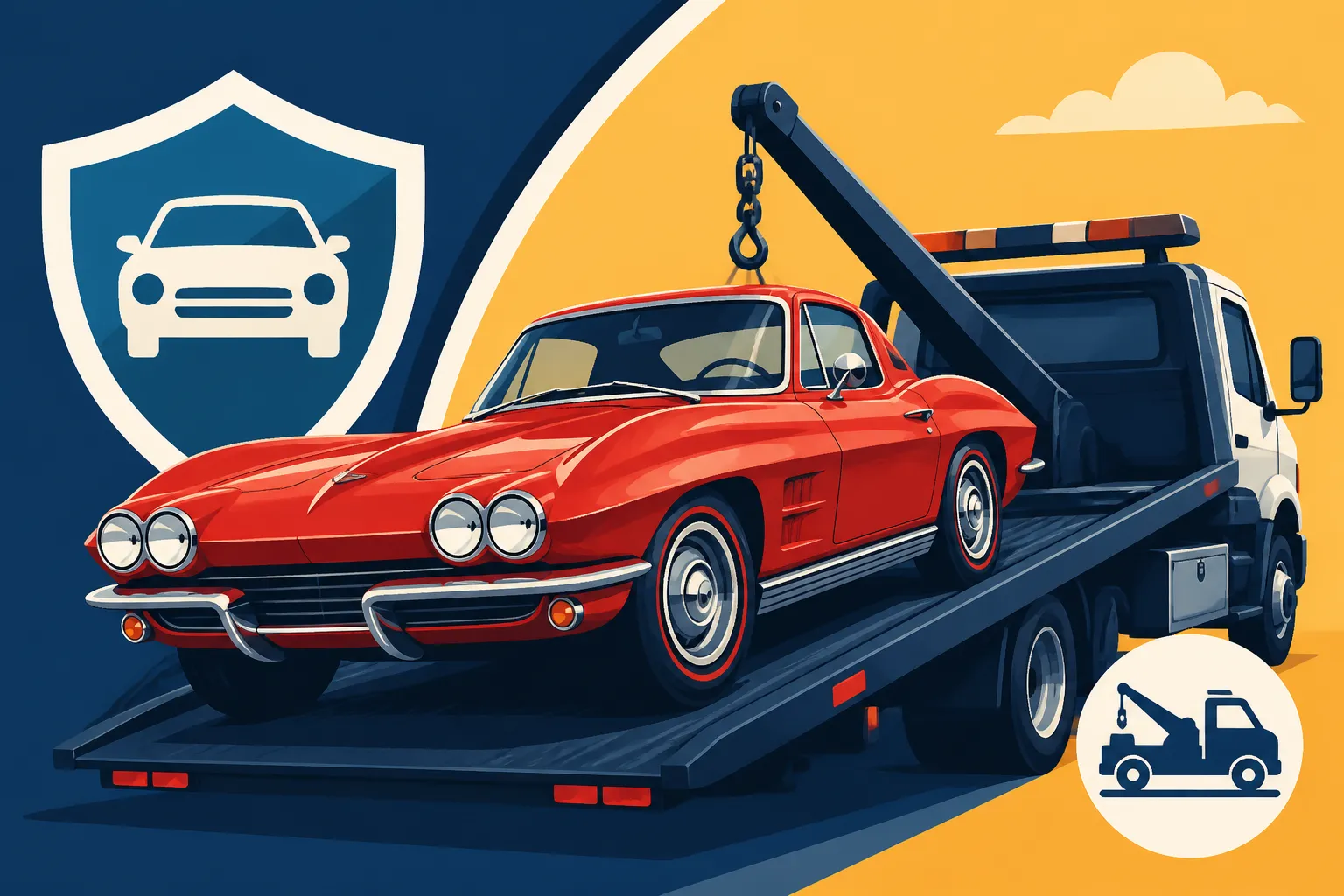
The absolute cornerstone of specialty classic car towing is the guaranteed use of a flatbed tow truck. Why is this so vital? A flatbed truck allows the entire vehicle to be driven or winched onto a flat, stable platform. This eliminates any contact with the road for the car's tires and underside, preventing damage to sensitive suspension components, low-hanging exhaust systems, or delicate bodywork. There's no risk of a tow hook scratching your bumper or a wheel lift bending a frame rail.
Many specialty insurers, like Hagerty, understand this critical distinction and prioritize flatbed services. They have networks of trusted towing providers who either specialize in classics or are explicitly instructed on the proper procedures for handling them. This isn't just a preference; it's a necessity for preserving the condition and value of your classic car. You can read more about Why Classics Need Flat-Bed Towing Coverage to fully appreciate this critical feature.
Specialized Equipment and Operator Expertise
It’s not enough to just have a flatbed; the equipment on the flatbed and the operator behind the wheel also matter immensely. Specialty towing coverage ensures that the service dispatched will have the right tools, such as soft straps that won't mar paint or chrome, and experienced operators who know how to properly secure a vintage vehicle. They understand how to find sturdy tie-down points without damaging suspension components or body panels.
These operators are often enthusiasts themselves or have received specific training in handling various types of classic vehicles, from a delicate pre-war roadster to a heavy muscle car. This expertise drastically reduces the risk of accidental damage during the loading, transport, and unloading process, giving you confidence that your vehicle is in capable hands. They know, for example, not to force a seized steering column on a car that hasn't run in years or to be mindful of fragile fiberglass bodies.
Extended Towing Distances and Destination Flexibility
One of the most significant advantages of specialty towing coverage is the vastly improved mileage limits or even unlimited towing distances. Instead of a measly 10-20 miles, many classic car policies offer coverage for 100, 200 miles, or even beyond. Some premium policies might even offer nationwide long-distance towing, ensuring your car can reach your preferred restoration shop, even if it's across state lines.
This flexibility in destination is invaluable. You won't be forced to use the closest, potentially inexperienced, mechanic. You can have your car transported directly to the expert you trust, whether that's your personal garage, a specialized repair facility known for your specific marque, or even a preferred restoration shop. This level of service is a stark contrast to standard policies that leave you stranded with limited options and a potential bill for hundreds, if not thousands, of dollars.
Key Features and Benefits of Dedicated Classic Car Towing
Choosing dedicated towing coverage for your classic isn't just a nice-to-have; it's an essential layer of protection for an investment that holds both monetary and sentimental value. It's about proactive preservation and peace of mind.
Protecting Your Investment from Further Damage
The primary benefit of specialty towing coverage is the unparalleled protection it offers against further damage to your classic. As we’ve discussed, generic towing methods carry inherent risks. A flatbed, combined with skilled operators and appropriate securing techniques, virtually eliminates these risks. This means that a minor mechanical issue won't escalate into a significant cosmetic or structural repair simply because of improper towing.
Consider a pristine 1969 Chevrolet Camaro, recently restored with a fresh paint job and rebuilt suspension. A standard tow truck could easily scuff the paint, bend a control arm, or scrape the exhaust system. With specialty coverage, the vehicle is carefully loaded onto a flatbed, secured with soft straps over the tires, and transported without any part of it touching the road or being subjected to undue stress. This safeguard directly contributes to maintaining your classic's condition and, by extension, its agreed value, which is critical for claims. Understanding Agreed Value Coverage Explained helps clarify how your car's value is protected.
Peace of Mind for Shows, Rallies, and Tours
Classic cars aren't meant to sit in a garage forever. They're meant to be driven, enjoyed, and showcased! Whether you're heading to the local Cars & Coffee, participating in a cross-country rally like the Great Race, or attending a prestigious concours d'elegance, the possibility of a breakdown is always present. Even the most meticulously maintained classic can develop an unexpected issue.
Specialty towing coverage provides immense peace of mind in these situations. Knowing that if your magnificent Jaguar E-Type breaks down 300 miles from home after a show, you can have it safely transported back to your preferred shop without additional financial stress is invaluable. This coverage transforms potential anxiety into confidence, encouraging you to drive and enjoy your classic more often. For those who participate in events, additional protections like Classic Car Show and Event Coverage Rules might also be beneficial.
Coverage for Mechanical Breakdowns and Accidents
It's important to clarify that classic car towing coverage typically extends to both mechanical breakdowns and incidents following an accident. If your engine suddenly gives up the ghost on the highway, or if you're involved in a fender bender, specialty towing ensures your vehicle is handled with the same level of care.
For mechanical issues, the flatbed ensures safe transport to a repair facility. In the unfortunate event of an accident, where your vehicle might already have damage, the gentle handling of a specialty tow prevents compounding that damage during recovery. It’s not just a convenience; it’s a vital component of your overall protection strategy, ensuring that whether it’s a minor fault or a major incident, your classic car is treated with the respect it deserves from the moment it needs assistance. Many policies also offer Roadside Assistance Coverage for Classic Cars Explained which can include jump starts or tire changes before towing is even necessary.
How to Evaluate and Choose the Right Towing Coverage
Navigating the options for classic car towing coverage can feel a bit overwhelming, but by focusing on a few key areas, you can make an informed decision that truly protects your cherished vehicle. It's not just about cost; it's about comprehensive, specialized care.
Assessing Your Driving Habits and Vehicle Vulnerabilities
Before you even start looking at policies, take a moment to honestly assess how you use your classic car. Do you only drive it to local shows a few times a year? Or do you take it on extended road trips, cross-state rallies, or weekend cruises that put significant mileage on the odometer? The more you drive your classic, and the further you stray from home, the more robust your towing coverage needs to be.
Consider your vehicle's specific vulnerabilities. Is it a particularly low-slung sports car? Does it have fragile bodywork? Is it a rare model where even minor damage during towing could significantly impact its value or be incredibly difficult to repair with original parts? A vintage Ferrari, for example, demands more meticulous handling than a relatively common Ford Model A. Factor these elements into your decision-making process. If you frequently travel, you might also want to look into Trip Interruption Coverage for Classic Cars Explained.
Comparing Provider Offerings and Network Quality
Not all classic car insurance providers offer the same level of towing coverage, and their networks of specialty tow services can vary significantly. This is where researching different providers becomes crucial. Companies like Hagerty and Grundy are well-known for their classic car expertise, and their towing services reflect this specialization. They often boast extensive networks of vetted tow operators who understand the nuances of classic vehicles.
When comparing, ask specific questions:
- Do they guarantee flatbed towing?
- What is the maximum towing distance or reimbursement amount?
- Do they have a 24/7 dispatch service with operators knowledgeable about classics?
- What is their average response time in your area?
- Can you choose your destination (e.g., your mechanic, your home garage) regardless of distance, within limits?
Don't be afraid to dig into the details. A cheaper premium might mean a less comprehensive towing benefit, leaving you exposed when you need it most. This is a critical factor when you are considering How to Choose Classic Car Insurance.
Understanding Mileage Limits and Reimbursement Options
Pay close attention to the mileage limits. Some policies might offer unlimited towing within a certain radius, while others provide a generous allowance (e.g., 100 or 200 miles) that covers most situations. Understand whether the coverage is a direct service dispatch or a reimbursement model. With direct service, the insurer arranges and pays for the tow. With reimbursement, you pay upfront and submit a claim, which can be a hassle and a financial burden if the tow is expensive.
Also, be clear about what happens if you exceed the mileage limit. Will the insurer cover a portion, or are you entirely on the hook for the rest? What about secondary towing if the first destination cannot complete the repair? These details, often buried in the fine print, can make a huge difference in an emergency. For a comparison of overall costs, examining How Much Does Classic Car Insurance Cost can give you a broader perspective.
Common Exclusions and Important Considerations
Even with the best specialty towing coverage, there are always situations and scenarios where your policy might not apply or where additional benefits come into play. It’s vital to understand these nuances to avoid surprises.
When Towing Coverage Might Not Apply
Like all insurance, classic car towing coverage comes with specific exclusions. While most policies are comprehensive for breakdowns and accidents, there are common scenarios where you might find yourself without coverage:
- Pre-existing Conditions: If your car breaks down due to a known, pre-existing mechanical issue you haven't addressed, some policies might deny coverage, especially if it's deemed negligence.
- Lack of Proper Maintenance: While classics need meticulous care, deliberately neglecting maintenance could be a factor. Insurers expect reasonable care to be taken.
- Racing or Competitive Events: Most standard classic car policies, including their towing components, explicitly exclude coverage for damage or breakdowns occurring during competitive driving events, track days, or races. You would need specific endorsements for Track Day and Autocross Coverage Options if this is part of your hobby.
- Off-Road Use: If you take your classic off paved roads, and it gets stuck or breaks down, standard towing might not cover recovery from an unpaved or inaccessible location.
- Intentional Damage or Fraud: This goes without saying, but any breakdown or damage resulting from intentional acts or fraudulent claims will not be covered.
Always read your policy documents carefully, especially the sections on exclusions and conditions. If you're unsure about specific activities, contact your insurer directly. Understanding Classic Car Insurance Exclusions to Know is a critical step in building a truly secure policy.
Emergency Repairs and Trip Interruption Benefits
Beyond just towing, some premium classic car insurance policies, often offered by top-tier providers such as Hagerty and American Collectors Insurance, integrate additional emergency benefits that go hand-in-hand with towing coverage. These can be lifesavers when you’re far from home:
- Emergency Repairs: While not covering the full cost of a major overhaul, some policies offer a limited amount for minor roadside repairs that can get you back on the road without needing a tow. This could include a small reimbursement for a battery replacement or a tire repair.
- Trip Interruption Coverage: If your classic breaks down hundreds of miles from home and requires an overnight stay while being repaired, trip interruption coverage can reimburse you for unexpected expenses like lodging, meals, and alternative transportation. This can be a huge relief, especially if you're stranded in an unfamiliar town.
- Return of Vehicle: In cases where your car needs extensive repairs far from home, some policies might even cover the cost of transporting the repaired vehicle back to your residence or preferred shop.
These additional benefits underscore the value of a comprehensive specialty classic car policy, turning a stressful breakdown into a manageable inconvenience. When you're building out your full protection plan, these endorsements are definitely worth considering, as detailed in Endorsements Every Collector Should Consider.
Integrating Towing with Your Overall Classic Car Insurance Policy
Towing coverage isn't a standalone product; it's a vital component of a well-rounded classic car insurance policy. Thinking about it holistically ensures you have seamless protection for every aspect of your classic car ownership.
Bundling for Comprehensive Protection
The best way to secure robust towing coverage is to integrate it directly into your primary classic car insurance policy. Most specialty insurers, like Grundy and J.C. Taylor, offer towing and roadside assistance as either a standard inclusion or an easily addable endorsement. By bundling these coverages, you simplify your insurance management and ensure that all aspects of your vehicle's protection are aligned with its unique needs.
Think of your classic car insurance as a layered defense. You have your core agreed value coverage protecting your investment's true worth, comprehensive and collision coverage for physical damage, and then, crucially, your towing and roadside assistance as the immediate response mechanism. When all these layers come from a single, classic car-focused provider, you get a cohesive plan. It means that when you call for a tow, the provider already understands your vehicle's special status and can dispatch the appropriate service, rather than you trying to explain the intricacies of your vintage roadster to a general insurance agent. For more on creating this comprehensive shield, check out How to Build a Complete Classic Car Policy.
The Role of Agreed Value in Towing Claims
While towing coverage directly handles the cost and logistics of moving your disabled vehicle, it’s intrinsically linked to your policy's agreed value. If, in the unlikely event, your classic suffers further damage during the towing process—for instance, if an inexperienced operator accidentally causes structural damage—your agreed value policy is what protects you.
With an agreed value policy, you and the insurer agree on your car's value before the policy starts. If a total loss occurs, or if significant damage needs repair, the insurer pays out this agreed-upon amount (minus your deductible). This is fundamentally different from actual cash value (ACV) or stated value policies, which can leave you severely underinsured. So, if your car is further damaged during a tow, your agreed value ensures that the cost of proper, high-quality repairs or replacement is fully covered, not depreciated. This is another reason why choosing the right Agreed Value vs Stated Value vs Actual Cash Value is paramount for any classic car owner. It’s all about ensuring that every component of your policy works together to protect your passion.
Table: Standard vs. Specialty Classic Car Towing Coverage
To help you visualize the differences, here's a quick comparison of what you typically get with standard roadside assistance versus dedicated classic car towing coverage:
| Feature | Standard Roadside Assistance (Typical Auto Policy) | Specialty Classic Car Towing Coverage (Classic Policy) |
|---|---|---|
| Tow Vehicle Type | Wheel-lift, hook-and-chain, sometimes flatbed | Guaranteed flatbed towing |
| Operator Expertise | General knowledge, trained for modern vehicles | Specialized training for vintage vehicles |
| Securing Methods | Standard chains, hooks (risk of damage) | Soft straps, specific tie-down points (damage prevention) |
| Mileage Limits | Typically 10-25 miles, fixed reimbursement | Extended limits (50-200+ miles) or unlimited, direct service |
| Destination Choice | Closest repair shop | Choice of preferred mechanic, home, or restoration shop |
| Damage Protection | High risk of secondary damage | Minimizes risk of secondary damage |
| Coverage Scope | Basic breakdowns | Breakdowns, accidents, show/event transport |
| Response Time Priority | Standard priority | Often higher priority for delicate vehicles |
| Additional Benefits | Jump starts, tire changes | Jump starts, tire changes, trip interruption, emergency repairs |
Disclaimer
Please remember that insurance policies and their coverages can vary significantly between providers and individual plans. This information is intended for general guidance only and does not constitute professional insurance advice. Always consult with a licensed insurance professional and thoroughly review your specific policy documents to understand your coverage, exclusions, and limits.