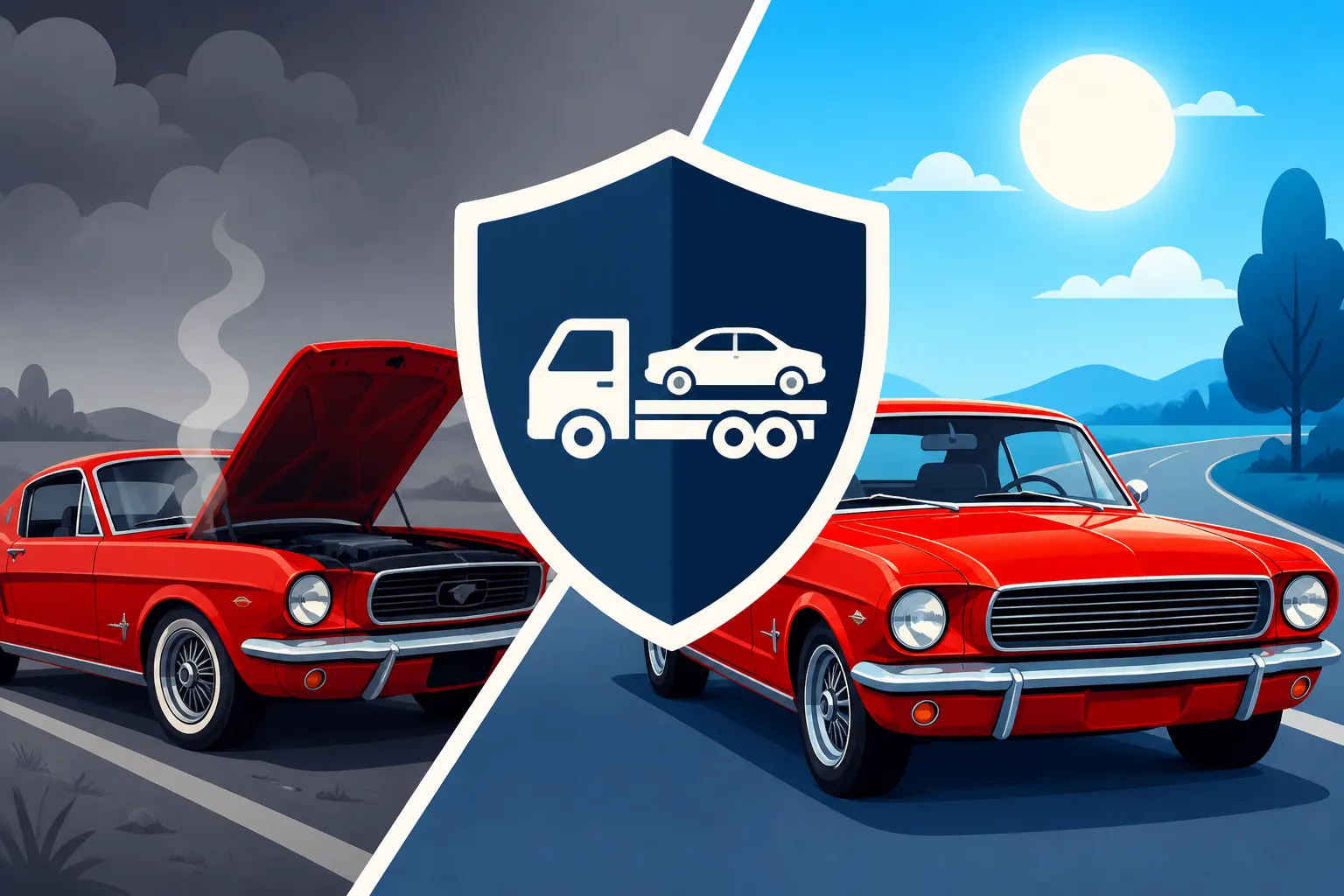
Do You Need Roadside Assistance Coverage for a Classic Car
There's nothing quite like the feeling of cruising in your classic car, turning heads, and soaking in the nostalgia. But then, that dreaded sputtering starts, the engine coughs, and you're suddenly stranded on the side of the road, far from home. This common fear highlights a critical question for every classic car owner: do you really need specialized roadside assistance coverage? This guide will dive deep into why generic roadside services often fall short and why tailored protection for your cherished collectible isn't just a luxury, but often a necessity.
Why Classic Cars Demand Specialized Roadside Assistance
Owning a classic car is a labor of love, a commitment to preserving a piece of automotive history. However, with that love comes the reality that these vehicles, by their very nature, can be more prone to unexpected issues than a modern daily driver. It's not a flaw, it's just part of their charm and age.
The Unique Vulnerabilities of Older Vehicles
Think about it: your classic might have been engineered decades ago, often with simpler systems that, while robust in their day, aren't designed for today's fuels, traffic, or even ambient temperatures. Common issues like vapor lock on a hot summer day, an unexpected electrical gremlin, a fuel pump deciding it's had enough, or even just a flat tire on bias-ply rubber can bring your joyride to a grinding halt. Unlike a new car that might simply flash a "check engine" light and limp home, classics often give little warning before completely conking out.
These vulnerabilities mean that a breakdown isn't just an inconvenience; it can be a moment of genuine concern for the well-being of your irreplaceable vehicle. You're not just worried about getting home; you're worried about preserving the integrity of your pride and joy. The unique demands of these older systems often require a different approach to diagnosis and repair, and certainly to safe transport.
The Dangers of Generic Towing and Repair
This is where the rubber meets the road, quite literally. When your classic breaks down, your first instinct might be to call any roadside service. But imagine a standard tow truck with a hook-and-chain setup attempting to tow your vintage Porsche 356 or a low-slung '60s muscle car. The potential for severe damage to bumpers, suspension, or even the chassis itself is incredibly high. These aren't modern unibody cars built for universal towing methods. They often have delicate undercarriages, custom paint jobs, and unique tie-down points that an inexperienced operator might not recognize or respect.
Moreover, if the breakdown leads to a repair, a generic mechanic might not have the specialized knowledge, tools, or even the right spare parts for your specific classic. They might try to force modern solutions onto a vintage problem, potentially causing more harm than good or dramatically reducing its originality and value. This highlights why understanding your Classic Car Insurance Coverage Types Explained is so crucial, as it helps you avoid these pitfalls. You don't just need a tow; you need a classic car tow and, potentially, a classic car mechanic.
What to Expect from Classic Car Roadside Assistance Coverage
When we talk about roadside assistance for a classic car, we're not just talking about a generic call-out service. We're talking about a tailored safety net designed with the unique needs and vulnerabilities of your cherished vehicle in mind. This specialized coverage understands that a classic isn't just a car; it's a piece of history.
Flatbed Towing is Non-Negotiable
For any classic car owner, the absolute bedrock of quality roadside assistance is flatbed towing. Let's be unequivocally clear: traditional hook-and-chain or wheel-lift towing is generally a non-starter for collectible vehicles. These methods can put immense stress on suspension components, damage delicate bodywork, bend bumpers, or even scrape precious undercarriages, especially on cars with low ground clearance. Imagine your pristine '60s Mustang getting dragged down the highway with its front end lifted, potentially scraping the exhaust or oil pan. It’s a collector's nightmare.
A specialized classic car roadside service understands this implicitly. They dispatch flatbed trucks, where your vehicle is gently winched onto a completely flat surface, securing all four wheels and distributing the weight evenly. This ensures no undue stress on any single point and minimizes any risk of further damage during transport. Reputable providers, like Hagerty Driver's Club, specifically highlight flatbed towing as a core offering, recognizing its importance for preserving your investment. This level of care is a huge differentiator when considering your Do You Need Full Coverage on a Classic Car options.
Beyond Towing: Other Critical Services
While flatbed towing is paramount, specialized roadside assistance often includes a suite of other services tailored to classic car ownership, giving you true peace of mind.
- Battery Jump-Starts: Older electrical systems, especially after a period of sitting, can sometimes lead to a drained battery. A quick jump-start can get you back on the road.
- Tire Changes: Many classics still run on tubes or non-radial tires, and changing them by the roadside can be tricky and even dangerous. Having a professional come out to swap a flat with your spare is a lifesaver.
- Fuel Delivery: Sometimes, you just misjudge the fuel gauge, or an old float mechanism is acting up. Running out of gas is embarrassing, but a quick delivery can save you a long walk.
- Lockout Services: Old locks can be finicky, and losing keys is always a possibility. A professional can help you regain access without damaging those irreplaceable door handles or window frames.
- Minor Mechanical Adjustments: In some cases, an experienced roadside technician might be able to make a small adjustment that gets your car running again, saving you a tow entirely. This might include tweaking a carburetor, checking a spark plug wire, or diagnosing a simple fuse issue.
These services, combined with the assurance of proper towing, mean that many common roadside woes can be resolved with minimal fuss and maximum care for your classic. It's an integral part of what makes Classic Car Insurance Add-Ons and Endorsements so valuable.
Is This Coverage Truly Necessary for Your Collector?
The question of necessity often boils down to a balance between potential financial outlay and the real-world risks and costs of going without. For classic car owners, this calculation has unique variables.
Calculating the Cost of a Breakdown Without Coverage
Let's break down the potential costs if you find yourself stranded without specialized roadside assistance. Imagine you're on a leisurely Sunday drive from Boston to the Berkshires in your perfectly restored 1968 Pontiac GTO when it suddenly overheats near Worcester, Massachusetts.
- Emergency Tow: Calling a general tow truck on the spot, especially on a weekend or holiday, can easily cost $150-$250 just for the hook-up, plus several dollars per mile. If you need a flatbed and the general service has to scramble to find one, the price could escalate quickly, potentially hitting $300-$500 or more for even a moderate distance.
- Improper Towing Damage: If you don't get a flatbed and the car is damaged during a conventional tow (a bent frame member, a scraped exhaust, a ripped-off spoiler), you're looking at hundreds, if not thousands, in repair costs. And the heartache? Priceless.
- Repair Shop Search and Transport: Now you need a shop that can handle your classic. If the first tow takes you to a general repair garage that can't work on it, you'll need another tow to a specialized vintage mechanic, doubling your towing expense. Many classic car specialists, especially in rural areas, might be quite a distance away.
- Lost Time and Frustration: Beyond the money, consider the time lost, the stress, and the sheer frustration. Instead of enjoying your classic, you're haggling with tow truck drivers and searching for a competent mechanic.
When you weigh these potential costs against the relatively modest annual premium for specialized classic car roadside assistance, the financial argument quickly favors coverage. It's often bundled with your primary classic car insurance, making the overall Classic Car Insurance Cost: Complete Breakdown even more appealing.
The Intangible Value of Peace of Mind
Beyond the dollars and cents, there's the immeasurable value of peace of mind. Owning a classic car is supposed to be enjoyable, not a constant source of anxiety about breaking down. Knowing that a specialized service is just a phone call away, ready to dispatch a flatbed and competent assistance, allows you to truly relax and savor every mile.
This peace of mind extends to protecting your investment. Your classic car isn't just transport; it's a valuable asset, often with an Agreed Value Coverage Explained that reflects its condition and rarity. Improper handling during a breakdown can chip away at that value, not to mention your emotional attachment. Specialized roadside assistance ensures that your investment is treated with the respect and care it deserves, even in an unexpected crisis. It lets you explore new routes, attend distant car shows, and embark on road trips without a knot of worry in your stomach. When you think about it, the convenience of knowing you're covered for unexpected situations contributes significantly to Why Classic Car Insurance Is Cheaper Than Regular.
How to Choose the Best Roadside Assistance for Your Classic
Selecting the right roadside assistance is as important as choosing your main classic car insurance policy. It's about finding a provider that truly understands the unique demands of your vintage ride.
What to Look For in a Specialty Policy
When evaluating roadside assistance plans, particularly for a classic, you need to look beyond the basic assurances. The details matter immensely.
First and foremost, confirm that flatbed towing is explicitly guaranteed and standard. Don't settle for "might send a flatbed" or "can request one." It should be the default option for your type of vehicle. Many leading classic car insurance providers, such as Hagerty and American Collectors Insurance, integrate this directly into their offerings, understanding its critical nature.
Secondly, investigate the mileage limits. Generic plans often have very restrictive towing limits, like 5-10 miles. For a classic that might break down far from a specialized shop, this is completely inadequate. Look for plans with generous mileage allowances, often 100-200 miles per tow, or even unlimited mileage options. This ensures you can get your vehicle to your trusted mechanic, not just the nearest shop.
Consider the 24/7 service availability and the speed of dispatch. When you're stranded, you want prompt, reliable service. Some providers have extensive networks of classic-savvy tow operators, ensuring quicker response times and more appropriate handling. For instance, Hagerty Classic Car Insurance Review often highlights their robust roadside program for this very reason.
Finally, check for specific coverage for common classic car issues. Does the plan cover things like fuel delivery if you run out of premium non-ethanol gas? Or assistance with a tricky tire change on spoke wheels? These small details can make a huge difference in a stressful situation.
Here's a quick comparison of what separates general roadside assistance from a specialized classic car plan:
| Feature | Generic Roadside Assistance (e.g., via personal auto policy) | Specialized Classic Car Roadside Assistance (e.g., Hagerty) |
|---|---|---|
| Towing Method | Often hook-and-chain or wheel-lift, flatbed by request/availability | Standard flatbed towing for all classics |
| Towing Distance | Typically 5-25 miles included, extra cost for more | Usually 100-250 miles or unlimited per tow |
| Operator Expertise | General towing knowledge, may not understand classic car needs | Operators often trained or experienced with classic vehicles |
| Damage Risk | Higher risk of damage to delicate classic components | Minimized risk due to specialized equipment and handling |
| Special Services | Basic jump-start, tire change, fuel delivery | May include specific battery types, careful lockout, minor adjustments |
| Network | Broad, but not necessarily classic-focused | Curated network of classic-friendly service providers |
Integrating with Your Overall Classic Car Insurance
Many of the Best Classic Car Insurance Companies offer roadside assistance as a direct add-on or even as an included feature with their comprehensive policies. This integration is often the most cost-effective and seamless way to get this crucial coverage. When you're putting together your policy, whether you're inquiring about Classic Car Insurance Requirements Explained or how to get the most comprehensive protection, always ask about roadside assistance options.
Bundling it with your classic car insurance means you have one point of contact for all your needs, from a claim after an accident to assistance during a breakdown. It ensures that the same company that values your car at an agreed amount will also ensure its safe transport and care should an issue arise. When you How to Compare Classic Car Insurance Quotes, make sure to factor in the quality and extent of their roadside assistance. It's a small investment that offers disproportionately large returns in peace of mind and protection for your irreplaceable classic.
Disclaimer
Please remember that this article provides general information and guidance regarding classic car insurance and roadside assistance. Insurance policies, coverage options, and requirements can vary significantly by provider, vehicle type, and state regulations. It is always recommended to consult directly with a qualified insurance professional or your chosen classic car insurance provider to discuss your specific needs and obtain personalized advice and quotes. Ensure you read your policy documents carefully to understand your coverage limits, exclusions, and terms.