How Collision Coverage Works for Collectors
It’s a gut-wrenching thought for any classic car owner: that moment when your pride and joy suffers an unexpected ding, a fender-bender, or worse. The fear isn't just about the damage itself, but about how your insurance will handle a vehicle that's far from a typical daily driver. This guide is here to untangle the complexities of collision coverage specifically for collectors, ensuring you understand exactly how to protect your unique investment.
What Is Collision Coverage, Really?
The Basics of Standard Collision
In the world of everyday cars, collision coverage is pretty straightforward, right? You probably already have it on your daily driver. If your vehicle happens to hit another car, a stationary object like a telephone pole, a fence, or even if you swerve to avoid something and end up in a ditch, this part of your auto policy is designed to kick in. After you pay your agreed-upon deductible, it covers the cost to repair or replace your vehicle, up to its actual cash value (ACV). It's essentially about getting your standard commuter car back on the road after an accidental impact, pure and simple.
But here’s where the "simple" part starts to unravel for us classic car enthusiasts. While the basic premise of collision remains the same—it covers damage from impacts—the nuances become incredibly significant when you’re dealing with a vehicle that isn't just transportation. For us, a classic isn't just a car; it's a piece of history, a passion project, often the culmination of years of dreaming and hard work. It's a rolling work of art that holds a deeply personal and often financial investment far beyond its mere utility.
Because of this profound difference in how we view our vehicles, the standard interpretation of collision insurance, which is primarily built for quickly depreciating assets, simply doesn't grasp the unique value proposition of a collector car. It’s a square peg in a round hole situation, and it can lead to immense frustration and financial loss if you try to fit your prized possession into that mold. This is precisely why specialized classic car collision coverage exists, and why understanding it is so vital for every collector.
The Collector's Perspective: More Than Just a Ding
For someone who cherishes a classic car, the thought of a collision is enough to make your stomach drop. It’s not just about the bent metal or broken glass; it's about the potential loss of originality, the diminished value of a carefully restored vehicle, and even the feeling of having a piece of its unique story compromised. Imagine your beloved 1967 Mustang, a car you spent years finding and restoring, suffering front-end damage in a minor accident. To a regular insurer, it might just be another old car needing repairs.
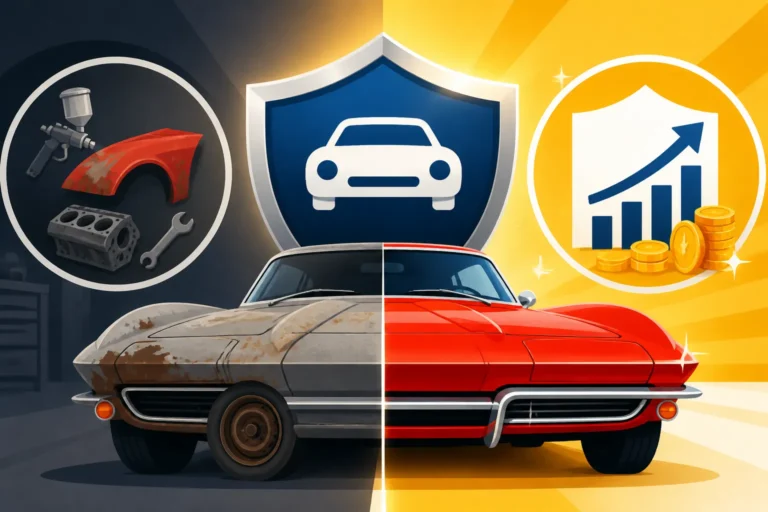
They might suggest using aftermarket parts, which, while functional, could significantly detract from your classic's authenticity and long-term value. Or they might direct you to a general body shop that lacks the specialized knowledge for vintage fabrication and period-correct finishes. For you, the owner, the imperative is finding period-correct sheet metal, ensuring the paint matches a specific factory shade from decades ago, or needing a specialist who truly understands the intricacies of vintage bodywork. The frustrations quickly mount when a generic approach is applied to a highly specific, valuable asset.
This is where the standard definition of collision coverage begins to show its severe limitations. It fails to account for the unique market, the specialized labor, and the intrinsic value that makes a classic car classic. A true collector's collision policy recognizes that it’s about protecting the inherent value and authenticity of the classic, not just its depreciated utility. It's about safeguarding the investment of time, money, and passion you’ve poured into your vehicle, ensuring that even after an incident, its soul remains intact.
Why Standard Collision Falls Short for Classic Cars
Actual Cash Value vs. Your Investment
This is arguably the most significant pitfall of trying to insure a classic car under a regular auto policy's collision coverage. Standard policies are designed around the concept of Actual Cash Value (ACV). In simple terms, ACV is calculated as the replacement cost of your vehicle minus depreciation. For a brand-new car, say a recent model year sedan, this might be perfectly acceptable. Its value drops considerably the moment you drive it off the lot, and continues to depreciate with mileage and age. The purpose of ACV in this context is to replace it with a similar, used vehicle of the same age and condition.
However, for a classic car, this model is completely illogical and potentially financially devastating. The value of a meticulously maintained, rare, or restored classic often appreciates over time, or at the very least, holds its value far better than a modern car. So, if you've invested $75,000 into acquiring and beautifully restoring a 1969 Camaro, and it's then deemed a total loss under an ACV policy, the insurer might look at its original sale price from 1969 (which could be just a few thousand dollars), factor in "depreciation" as if it were a disposable modern vehicle, and offer you a payout that is a mere fraction of what your car is actually worth today.
This scenario is the exact frustration and financial risk that classic car insurance, with its cornerstone of agreed value, was created to eliminate. It’s not about what the car was worth new, or what a generic used car of similar age might fetch; it's about what your specific, unique classic is valued at right now, to a collector like you. This fundamental difference in valuation is what makes standard collision coverage a non-starter for serious enthusiasts who want to truly protect their automotive investments.
The Depreciation Trap
Beyond the initial, flawed ACV calculation, the very concept of "depreciation" as applied by standard insurers is a continuous trap for classic car owners. Most traditional insurance algorithms are built on the assumption that a vehicle, with rare exceptions, loses value every single year it ages. While this holds true for a 2020 Toyota Camry, which will be worth less in 2025, it’s often the complete opposite for a 1957 Chevrolet Bel Air, which might be worth more in 2025 than it is today.
Standard insurance models are simply not equipped, or designed, to recognize or respond to this unique market dynamic. They see an "old car," not a valuable, appreciating asset, a piece of art, or a meticulously maintained historical artifact. This fundamental misunderstanding of the classic car market means that any payout for collision damage, whether it's a minor repair or a total loss, could leave you significantly short of what you actually need to restore your classic to its pre-accident glory, or to replace it with a comparable vehicle. The policy doesn't reflect the true market value or your investment.
It's a truly bitter pill to swallow when you've poured your heart, soul, and considerable funds into preserving a piece of automotive history, dedicating weekends and countless hours to its care, only to have its genuine value diminished by an outdated insurance model. This inherent flaw underscores why understanding how to protect your investment with a specialized policy is not just advisable, but absolutely crucial for any classic car enthusiast. It's about getting an insurer who understands that your classic isn't just old, it's valuable.
Limited Scope for Specialty Repairs
Another major, often overlooked, hurdle with regular collision coverage is its profound inability to account for the highly specialized nature of classic car repairs. When your 1970 Plymouth Hemi 'Cuda needs a new quarter panel, or your vintage Porsche 356 suffers chassis damage, you simply cannot take it to the nearest chain auto repair shop or the dealership down the street. These vehicles require a very specific skillset, often involving fabrication, sourcing rare parts, and understanding period-correct finishes and assembly.
Standard insurers typically operate with a network of approved repair shops that are perfectly competent for modern vehicles, but are almost always completely unequipped and inexperienced with classics. They might insist on using generic aftermarket parts, or cheaper, faster repair methods that, while effective for a commuter car, could severely compromise your classic's originality, structural integrity, and long-term value. For instance, if your vehicle requires a specific type of paint matching that involves vintage pigments, intricate chrome plating work, or expert lead-filling for bodywork, a general repair facility will neither have the capabilities nor truly understand the critical importance of such details.
This difference can easily lead to a frustrating and protracted battle with your insurer over repair methods, the quality of parts, and ultimately, the costs. It adds immense stress to an already difficult situation, leaving you worried that your prized possession might never be the same. The significant advantage of a dedicated classic car policy is its inherent recognition of these unique needs, often allowing you the freedom to choose your own trusted, specialized restorer—someone you already know and trust with your prized possession—or you can rely on the insurer's vetted network of master craftspeople. This ensures that repairs are performed to the highest standards, preserving your classic's unique character and value.
How Classic Car Collision Coverage Is Different
The Power of Agreed Value
This feature, often referred to as "agreed value" or "guaranteed value" coverage, is the absolute cornerstone of effective classic car collision insurance and the primary factor that truly sets it light-years apart from standard auto policies. The concept is beautifully simple and incredibly powerful: when you purchase your classic car policy, you and the insurance company come to a mutual agreement on a specific, fixed value for your vehicle upfront. This agreed value isn't pulled out of thin air; it’s typically established based on comprehensive independent appraisals, a deep understanding of current market trends for similar classics, and detailed documentation of your car's specific condition, any modifications you’ve made, and its restoration history.
The real peace of mind comes into play if, heaven forbid, your classic car is ever deemed a total loss due to a covered collision. In this devastating scenario, the insurer will pay you that full, agreed-upon amount, no questions asked, minus your deductible. There are no surprise depreciation calculations after the fact, no agonizing haggling over subjective "market value" when you're already reeling from the loss. This completely removes the uncertainty and financial vulnerability associated with standard ACV policies.
Consider this: if you and your insurer formally agree that your meticulously restored 1965 Corvette is worth $100,000, and it's unfortunately totaled in an accident, you will receive $100,000 (less your deductible) to either replace it or move on. This guarantees that your significant investment of time, money, and passion is truly protected, giving you the financial security to either find another dream car or continue your collecting journey. Many collectors quickly realize that understanding Agreed Value Coverage Explained makes opting for a specialized policy an absolute necessity, not a luxury.
Specialized Repair Networks and Expertise
Beyond just the valuation, another critical difference in classic car collision coverage lies in the practical aspect of repairs. Leading classic car insurance providers, such as Hagerty or American Collectors Insurance, fundamentally understand that a vintage or collector vehicle demands more than just any standard body shop. Their collision coverage often provides access to, or at least recommendations for, a specialized network of repair shops that possess proven expertise and a deep passion for classic and collector vehicles. These are shops that live and breathe vintage automobiles, accustomed to the unique challenges of working with rare parts, specific fabrication techniques, and the painstaking art of maintaining originality.
When a collision inevitably happens, even a minor one, you are not forced into a corner, mandated to use a generic repair facility that might lack the necessary skills or inadvertently compromise your car’s integrity and long-term value. Instead, you'll often have the flexibility to choose your own trusted, local classic car restorer—someone you already know and trust with your prized possession—or you can rely on the insurer's carefully vetted network of specialists who truly appreciate what they're working on.
This crucial distinction ensures that any repairs are executed correctly, using appropriate, period-correct parts and methods, thereby safeguarding your car's intrinsic value, authenticity, and historical accuracy. It’s a significant difference that provides collectors with the confidence and assurance that their prized possession will be handled with the utmost care and respect it profoundly deserves, preventing further heartache and financial loss. The beauty of a dedicated classic car policy is its recognition of these unique needs, often allowing you to choose your own specialty repair shop, which highlights why it's so different from Classic Car Insurance vs Regular Insurance: What's Required.
Coverage for Project Cars and Restoration
The passion of owning a classic car often extends far beyond merely driving it; it frequently involves the meticulous journey of extensive restoration or ongoing, detailed projects. A standard collision policy would typically offer little to no coverage for a car that’s disassembled in your garage, sitting on jack stands, or undergoing a painstaking frame-off restoration. This can be a huge source of anxiety for collectors, as an accidental knock, a fire in the garage, or even a sudden storm causing damage could wipe out years of hard work and significant financial investment.
However, specialized classic car collision coverage specifically addresses this unique need by extending protection to vehicles "under construction." This is a massive relief for enthusiasts, allowing them to pursue their restoration dreams with greater peace of mind. Many policies offer Restoration Coverage for Classic Cars which is designed to protect the increasing value of your project car as you invest more time, money, and rare parts into bringing it back to life. This means that if something unforeseen happens, your substantial investment isn't lost.
Imagine you're deep into restoring a rare 1950s pickup truck, and a shelf in your garage unexpectedly collapses, causing significant damage to the bodywork you just painstakingly straightened and painted. With the right classic collision policy, the investment you've already made in parts, specialized labor, and your own dedicated hours is protected, preventing a catastrophic setback. The beauty of this type of coverage is that it often allows you to incrementally increase the agreed value as you complete significant stages of restoration, ensuring you're never underinsured. For anyone undertaking a long-term build, this tailored protection is absolutely indispensable, confirming that your hard work and financial commitment are always properly safeguarded. If you're wondering How to Insure a Car Under Restoration, this specific type of collision coverage is the essential element you need to look for.
Key Considerations for Your Classic Car Collision Policy
Understanding Your Deductible
Just like with standard auto insurance, classic car collision coverage comes with a deductible. This is the amount you agree to pay out-of-pocket before your insurance policy's coverage begins to kick in for a claim. Deductibles can vary significantly, ranging anywhere from a symbolic $0 or a few hundred dollars up to several thousands of dollars. Generally, choosing a higher deductible will result in a lower annual premium, which can be an attractive option for some collectors looking to manage costs.
However, when it comes to your classic, it's absolutely vital to select a deductible that you are genuinely comfortable paying in the unfortunate event of an incident. For a classic car, where even seemingly minor repairs can quickly become substantial due to the need for specialty parts, highly skilled labor, and period-correct finishes, selecting too high a deductible just to save a few dollars on your annual premium might not be the wisest financial choice. You could find yourself facing a surprisingly large out-of-pocket expense for what you thought was a small ding.
Conversely, a very low deductible will undoubtedly lead to higher premiums. It's a careful balance that requires honest self-assessment of your financial comfort level and a realistic understanding of potential repair costs for your specific vehicle. For example, if you own a rare 1932 Ford hot rod, even a relatively minor fender bender could easily exceed a $1,000 or $2,500 deductible just in specialty paint and intricate bodywork alone, not to mention parts. Having a candid discussion with your chosen insurer, like Hagerty or Grundy, about the various deductible options can help you find that perfect sweet spot that aligns with your budget and provides true peace of mind, especially when considering What Affects Classic Car Insurance Rates.
Mileage Restrictions and Use Clauses
One of the primary reasons classic car insurance is frequently more affordable than regular auto insurance policies is the fundamental understanding that these cherished vehicles are typically not daily drivers. They're weekend warriors, show queens, and fair-weather cruisers. Because of this, most classic collision policies come with specific mileage restrictions or distinct "use clauses" that dictate how the vehicle can be operated. These restrictions might limit your annual mileage to a modest figure, perhaps 2,500, 5,000, or some other agreed-upon number that reflects occasional use. Furthermore, policies often stipulate "pleasure use" only, meaning the car is primarily intended for car shows, club events, leisurely drives, parades, or occasional errands, rather than regular commuting to work or school.
It is absolutely crucial to be completely honest and transparent about your intended use and typical annual mileage when you are setting up or renewing your classic car policy. Exceeding these agreed-upon mileage limits or using the car for purposes not explicitly covered by your policy (e.g., relying on it for daily commuting if your policy strictly states pleasure use) could, in a worst-case scenario, jeopardize your collision claim should an accident occur. Insurers meticulously review these conditions, and a breach could lead to a denial of your claim, which would be devastating.
While these restrictions might seem limiting, they are what allow specialty insurers to offer such favorable rates. However, for those collectors who desire more flexibility, some leading insurers do offer more generous or even "unlimited" mileage options, though these invariably come with a higher premium to reflect the increased risk. Always take the time to clarify these specific terms with your agent upfront to ensure your policy perfectly aligns with how you truly plan to use and enjoy your classic. Understanding these details is key to ensuring your Classic Car Insurance Eligibility Requirements are consistently met, and also ties into knowing about the Daily Driver Requirement for Classic Car Insurance.
Appraisals and Documentation
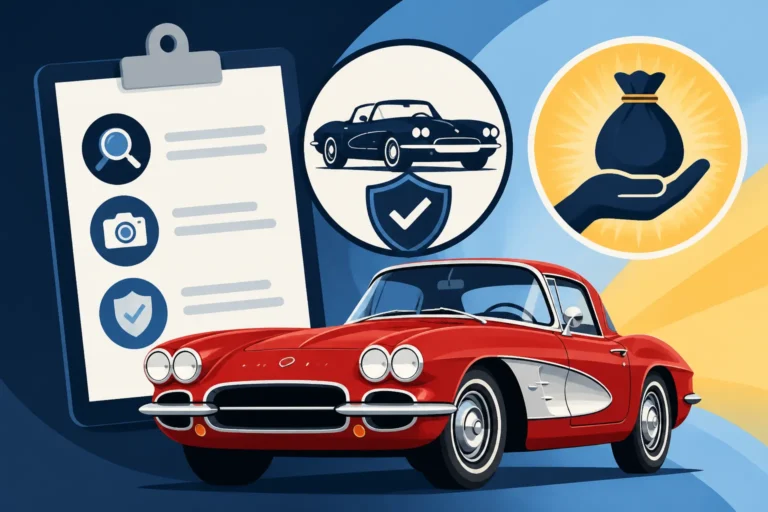
To fully leverage the "agreed value" collision coverage that truly and unequivocally protects your classic car, comprehensive independent appraisals and thorough documentation are not just recommended—they are absolutely essential. Think of an independent appraisal, conducted by a qualified and experienced classic car appraiser, as an objective, professional assessment of your vehicle's condition, its originality, any significant modifications, and its current market value. This crucial document serves as irrefutable evidence and is incredibly valuable in establishing the initial agreed value with your insurer, giving them a clear, expert-backed baseline.
Beyond the initial appraisal, it is equally important to maintain meticulous records of absolutely everything related to your classic. This includes detailed logs of all restoration work, routine maintenance, any significant repairs, receipts for rare or specialized parts purchased, and even documentation of awards or accolades your car has received at shows. High-quality, clear photographs of the vehicle from all angles, including detailed shots of unique features, VIN plates, engine bay, interior, and any recent work performed, are also incredibly helpful and can speak volumes.
These exhaustive records and visual proofs serve as robust, irrefutable evidence of your classic's condition, pedigree, and value. Should the unfortunate event of a collision occur and you need to file a claim, having this well-organized, comprehensive documentation makes the entire claims process significantly smoother, less stressful, and helps to ensure that you receive the full, agreed-upon amount without unnecessary disputes. It's essentially building a bulletproof resume for your car; the more detail, the better protected your investment will be. This level of meticulous detail is often a prerequisite for many specialized insurers, making a clear understanding of How Classic Car Appraisals Work for Insurance a critical, foundational step in securing proper coverage, and also helps clarify How Agreed Value Is Determined.
Understanding Classic Car Collision Exclusions
Even with the most robust and specialized classic car collision policy in place, it’s absolutely vital to remember that there are always specific exclusions to be aware of. While dedicated classic insurance policies undeniably cover far more scenarios and provide superior protection compared to standard auto policies, they are not an "all-risk" solution that covers every conceivable eventuality. Being proactive and understanding these common exclusions can save you from significant heartbreak and financial disappointment down the road.
Common exclusions you might encounter in a classic collision policy typically include: damage sustained during competitive racing, autocross events, or professional track days. Unless you've specifically purchased an endorsement for these activities, standard collision coverage for classics will likely not cover incidents in such high-risk environments. Similarly, taking your classic vehicle off paved roads for serious off-roading and sustaining damage is generally excluded, as classics are typically meant for road use. Collision coverage is also for sudden, accidental impacts, meaning it won't cover damage resulting from normal wear and tear, mechanical failures, or parts that simply deteriorate over time.
It's also important to distinguish between collision and other types of incidents. For instance, while devastating, theft, vandalism, or damage from natural disasters like floods, hail, or fires are not considered collision events. These incidents fall under comprehensive coverage, which is usually a separate but often bundled component of a full classic car policy. Lastly, any damage caused intentionally by the owner or authorized driver would, understandably, not be covered. Always make it a priority to thoroughly read your specific policy documents and have an open, candid discussion with your agent about any unique activities or situations you anticipate for your classic. Never assume coverage; always confirm it. This proactive approach is key to avoiding nasty surprises later and fully understanding Classic Car Insurance Exclusions to Know, which are vital for every responsible collector. This also includes examining all Classic Car Insurance Add-Ons and Endorsements to ensure you have the right fit for your needs.
| Feature | Standard Collision Coverage (Regular Car) | Classic Car Collision Coverage (Specialty Policy) |
|---|---|---|
| Valuation Method | Actual Cash Value (ACV) – replacement cost minus depreciation | Agreed Value (or Guaranteed Value) – pre-determined fixed amount |
| Depreciation | Actively applied, reduces payout | Not applied; value is agreed upon |
| Repair Philosophy | Cost-effective, often uses aftermarket parts | Focus on authenticity, original parts, specialty shops |
| Shop Choice | Limited to insurer's network, general repair shops | Often allows choice of specialty restorer or network |
| Mileage Limits | Generally no limits, assumed daily driver | Typically restricted (e.g., 2,500-5,000 miles/year) |
| Use Restrictions | Assumed daily transport, commuting | Pleasure use, shows, parades, touring, leisure drives |
| Project Car Coverage | Rarely, if ever, covers cars under restoration | Often includes restoration/project car coverage (can increase value over time) |
| Appraisal Requirement | Not typically required | Often required or highly recommended for valuation |
Disclaimer
Please remember that insurance policies can vary significantly between providers and individual circumstances. The information provided here is for general guidance only and does not constitute professional insurance advice. Always consult with a qualified insurance agent or legal professional to understand the specific terms, conditions, and exclusions of your policy, and to determine the best coverage for your unique classic vehicle.