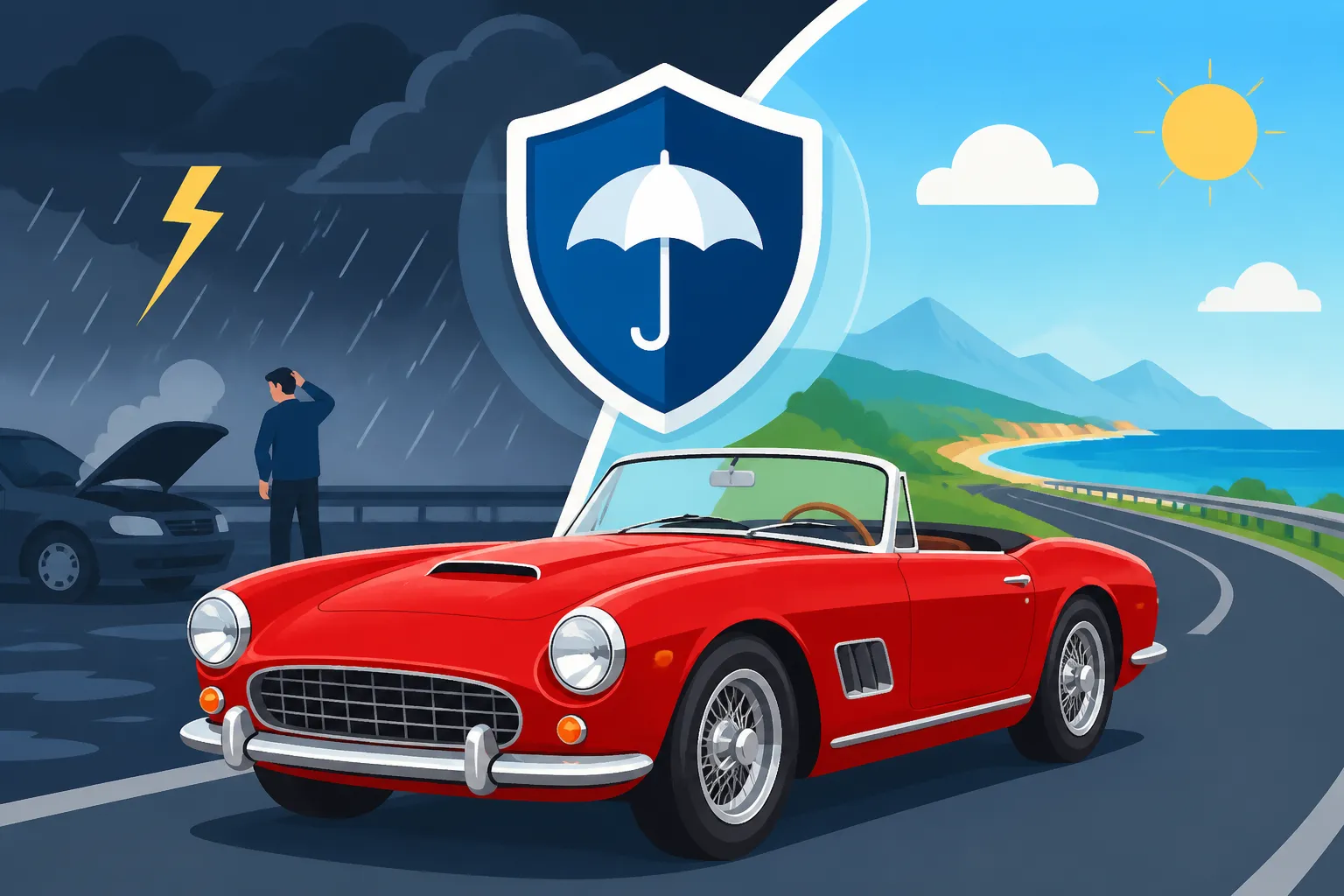
Do You Need Trip Interruption Coverage for a Classic Car
There’s nothing quite like the open road with your classic car, the wind in your hair, and the rumble of a vintage engine. But let's be honest, for all the joy and nostalgia, a nagging worry often rides shotgun: what if something goes wrong, miles from home, in the middle of nowhere? Breaking down isn't just an inconvenience in a modern car; in a classic, it can quickly become an expensive, complicated, and utterly miserable ordeal. This guide is here to walk you through exactly what trip interruption coverage is, why it matters for your cherished collectible, and how it can save your bacon when the unexpected happens on your adventures.
Understanding Trip Interruption Coverage for Classic Cars
When you’re planning a road trip with your vintage beauty, whether it's a cross-country tour or just a weekend getaway a few hundred miles from home, you’re often thinking about gas stops, scenic routes, and maybe where to grab a good burger. What you're probably not thinking about is your transmission giving up the ghost 500 miles from your garage. That's where trip interruption coverage comes into play, offering a safety net specifically designed for these types of unfortunate events.
What Exactly Does It Cover?
At its core, trip interruption coverage is an add-on to your classic car insurance policy that provides reimbursement for unexpected expenses if your classic car becomes disabled during a road trip, preventing you from continuing your journey as planned. This isn't just about the cost of repairs; it's about the consequential costs that stack up when you're stranded. Think about it: if your 1969 Camaro throws a rod in rural Nebraska, you're suddenly looking at more than just a repair bill. You might need a hotel room for a few nights while parts are sourced, alternative transportation to get home or to your destination, and even money for meals.
Many standard policies don't automatically include this level of protection. It's often an endorsement you specifically add to your policy, and the benefits can vary between providers. Typically, it covers things like:
- Lodging: Reimbursing you for hotel stays while your car is being repaired, or if you need to stay overnight before arranging travel home.
- Alternative Transportation: Covering the cost of a rental car, train ticket, or even airfare to get you and your passengers to your intended destination or back home.
- Meals: Providing a per diem for food expenses incurred during the unexpected delay.
The specifics of reimbursement limits (e.g., maximum dollar amount per day for lodging, or total trip coverage limit) will be outlined in your policy, so it's vital to know these details upfront.
Why It's Different for a Classic
This type of coverage takes on a whole new level of importance when you own a classic car. Unlike a modern vehicle, where you can often get a part delivered overnight to almost any repair shop, classic cars present unique challenges. Finding a mechanic who specializes in vintage vehicles, or even just one willing to work on an older model, can be tough in an unfamiliar area. Then there’s the issue of parts – a rare carburetor or a specific trim piece isn't just sitting on a shelf at the local auto parts store. These delays mean you could be stranded for days, or even weeks, waiting for repairs.
Imagine your beautiful 1957 Chevrolet Bel Air breaking down in a small town. The local garage might be great with modern Fords, but they might not have the expertise or the diagnostic tools for a vintage carburetor or a mechanical fuel pump. This could mean your car needs to be towed a significant distance to a specialist. While your standard towing coverage would handle the initial tow, it won't pay for your hotel room, rental car, or meals during the extended wait. This is precisely where trip interruption coverage shines, cushioning the financial blow of those extended, classic car-specific delays. It’s about more than just getting your car to a shop; it’s about managing your life when your prized possession decides to take an unplanned vacation of its own.
Scenarios Where Trip Interruption Coverage Becomes a Lifesaver
Let's face it, classic cars are mechanical marvels, but they can be temperamental. While regular maintenance helps, unexpected issues can still arise, especially on longer journeys. Having trip interruption coverage isn't just a "nice-to-have"; for many collectors, it's a crucial piece of mind, especially when venturing far from their trusted mechanics and home garages.
Breaking Down Far From Home
This is the quintessential scenario where trip interruption coverage proves its worth. Picture yourself driving your restored 1970 Dodge Challenger from Los Angeles to a car show in Phoenix. You’re making great time, enjoying the desert scenery, when suddenly, you hear a clunk and the engine sputters to a halt. You’re in Quartzsite, Arizona, a town known more for its RV rallies than its classic car repair shops.
Without trip interruption coverage, you’d be responsible for finding and paying for a hotel, probably for several nights, while you arrange for a specialized mechanic, potentially from Phoenix or even further, to come to you or have your car transported. You'd also need to figure out how to get to the car show or back home, likely involving a costly rental car or even a flight. This can quickly deplete your vacation budget and turn a dream trip into a nightmare. With trip interruption coverage, a significant portion of those unplanned expenses – your lodging, a rental car to continue your journey, or even a flight home if the repair is going to take too long – would be covered, often up to a specified limit. It's the difference between a stressful financial drain and an annoying, but manageable, bump in the road. This protection is part of the broader suite of coverage available to safeguard your investment.
Unexpected Roadside Repairs
Sometimes, the issue isn't a total breakdown but a repair that's just too complicated or time-consuming to fix on the side of the road with your basic toolkit. Maybe a fuel line cracks, a brake caliper seizes, or the alternator decides to quit. While roadside assistance will get your car towed to the nearest appropriate facility, that's often just the beginning of your problems with a classic.
Let's say you're driving your beautifully maintained 1965 Ford Mustang through the Blue Ridge Mountains in Virginia, and you start experiencing charging issues. You get it towed to a small garage in a town like Galax. They diagnose a bad voltage regulator, but it's a specialized part for an older Ford, not something they stock. They have to order it, and it might take a few days to arrive. During that time, you're stuck. Trip interruption coverage would step in here, covering your accommodations and meals for those days you're waiting for the part and the repair. It allows you to relax, knowing that at least your living expenses are taken care of, rather than agonizing over unexpected hotel bills piling up while your beloved Mustang sits in a bay.
The Importance of Peace of Mind on Long Drives
For many classic car owners, the joy of ownership isn't just in showing off the car, but in driving it. They take immense pride in maintaining their vehicles and embarking on long tours, rallies, and club events. However, this enjoyment can be overshadowed by the constant worry of a breakdown, especially when you're hundreds or thousands of miles from your home garage and familiar resources.
This is where the psychological benefit of trip interruption coverage becomes invaluable. Knowing that if the worst happens, you won't be left completely financially vulnerable provides immense peace of mind. It allows you to truly enjoy the journey, focusing on the winding roads, the beautiful scenery, and the camaraderie of fellow enthusiasts, rather than fretting about potential mechanical failures. Many enthusiasts who participate in long-distance events like the Great Race or local club tours find this coverage indispensable. It transforms the "what if" into a manageable situation, letting you live out your classic car dreams without undue anxiety. If you're planning any kind of touring or rally event, this coverage is a smart consideration.
Deciding If Trip Interruption Coverage Is Right for You
Making the call on whether to add trip interruption coverage to your classic car policy isn't a one-size-fits-all decision. It really comes down to how you use your classic, its reliability, and your personal comfort level with unexpected expenses.
Assessing Your Driving Habits and Vehicle Reliability
The first thing to consider is how you typically use your classic car. Are you someone who keeps it strictly for local Sunday drives, car shows within a 50-mile radius, and short cruises? Or do you regularly take it on extended road trips, cross-state adventures, or to national classic car events that are hundreds of miles away? If your classic rarely leaves your local area, the chances of needing trip interruption coverage are significantly lower. In such cases, standard roadside assistance and towing might suffice for the occasional flat tire or minor issue.
However, if your passion involves logging serious miles, perhaps participating in classic car rallies or taking annual pilgrimages to events like the Woodward Dream Cruise in Michigan or various Concours d'Elegance, then this coverage becomes much more relevant. For instance, if you're hitting the road for a multi-day drive from New England down to Florida for a show, the sheer distance increases the probability of encountering an issue.
Beyond your driving habits, objectively evaluate your vehicle's reliability. Is it a meticulously restored, mechanically flawless machine that's been proven on many long journeys? Or is it a newer acquisition, a project car you just finished, or an older restoration that you know has a few quirks? While all classics can have unexpected issues, a car with known vulnerabilities or one that hasn't been thoroughly road-tested for long distances might warrant the extra protection.
Consider a collector with a fully restored 1967 Mustang with a well-documented service history versus someone who just completed a budget restoration on a 1978 Firebird Trans Am. While both are fantastic cars, the Mustang, if properly maintained, might have a lower statistical chance of a major breakdown compared to a recently worked-on Firebird that's still shaking out the kinks. However, it's always "when," not "if," with classics. Even the most perfectly restored vehicle can suffer a sudden mechanical failure. This is why many owners, regardless of their car's perceived reliability, opt for the peace of mind offered by this specific coverage.
Comparing Costs and Benefits
Like any insurance add-on, trip interruption coverage comes with a cost. This premium is usually a relatively small amount compared to your overall classic car insurance premium, but it's still an expense to weigh. You'll need to get a quote from your insurer, whether it's a specialty provider like Hagerty or American Collectors Insurance, or a standard carrier that offers classic car policies. Understand the exact dollar limits for lodging, meals, and alternative transportation. Some policies might offer higher limits for more extensive coverage, which would naturally come at a higher cost.
To help you compare, consider the following table:
| Scenario Description | Standard Roadside Assistance | Trip Interruption Coverage |
|---|---|---|
| Car towed to nearest shop | Yes | Included (via tow) |
| Hotel stay during repairs | No | Yes (up to limit) |
| Rental car to continue trip/go home | No | Yes (up to limit) |
| Meals during delay | No | Yes (per diem limit) |
| Specialized classic car tow | Often (flatbed) | Included (via tow) |
| Long-term storage during wait | No | No (typically) |
| Cost of parts/repairs | No | No |
Note: Specifics vary by policy and provider.
The benefit is clear: protection against significant out-of-pocket expenses if your trip is derailed. If a few extra dollars a month (or year) can prevent you from dropping hundreds or even thousands on unexpected hotels, rental cars, and food while stranded, then it's likely a worthwhile investment, especially if you drive your classic beyond your immediate vicinity. Think of it as a low-cost hedge against high-impact financial disruption. It's often a small fraction of the overall premium but can save you a fortune. When you're considering how to choose classic car insurance, this is one of those key optional coverages to scrutinize.
What to Look for in a Trip Interruption Policy
So, you've decided that trip interruption coverage sounds like a good idea for your classic. Great! But not all policies are created equal, and it's crucial to understand the nuances before signing on the dotted line. Just like with any other aspect of your overall classic car policy, the devil is in the details.
Coverage Limits and Reimbursement Tiers
The most important aspect to scrutinize is the actual dollar amount of coverage provided. Trip interruption policies don't offer unlimited reimbursement. Instead, they typically specify:
- Per-day limits for lodging: This might be something like $100 or $150 per night. Think about the type of hotels you'd realistically stay in if stranded and ensure the limit is sufficient. Being stuck in a small town might mean fewer options, potentially driving up the price of the few available motels.
- Per-day limits for meals: Often a smaller amount, such as $25-$50 per person per day.
- Total trip limit: This is the maximum amount the policy will pay out for all covered expenses related to a single trip interruption incident. This could range from $500 to $2,500 or more. If you're planning a week-long cross-country drive in your classic, you'll want a higher total limit.
- Alternative transportation limits: Some policies might specify a daily limit for a rental car, or a maximum amount for train or plane tickets home. Make sure the rental car allowance is enough to get a reasonably comfortable vehicle for the duration you might need it, as you won't be enjoying your classic.
When comparing quotes, don't just look at the premium. Dive into these specific limits. A slightly more expensive policy might offer significantly higher reimbursement limits, making it a much better value if you ever need to use it. Many specialty classic car insurers, like Hagerty, understand the unique needs of classic car owners and structure their trip interruption benefits accordingly, often with generous limits.
Eligibility Requirements and Exclusions
Just as your classic car insurance has specific requirements for your vehicle, trip interruption coverage also has its own set of rules. You'll want to pay close attention to the fine print regarding what constitutes a "trip" and what circumstances trigger coverage.
Common eligibility requirements and exclusions include:
- Distance from home: Most policies require you to be a certain distance from your primary residence for the coverage to kick in, often 50 or 100 miles. This prevents claims for breakdowns that happen during routine local drives.
- Duration of interruption: There might be a minimum number of hours your car must be disabled, or a minimum overnight stay required, before benefits are paid.
- Cause of disablement: Coverage typically applies to mechanical breakdowns, accidents, or theft. It usually won't cover things like running out of gas (though that might be covered by your general roadside assistance) or if you simply decide to cut your trip short for personal reasons.
- Maximum trip length: Some policies might have a maximum number of days for which a trip can be covered. If you're planning an epic month-long journey, ensure your policy can accommodate it.
- Exclusions for maintenance: The coverage isn't meant to pay for anticipated maintenance or repairs that you should have taken care of before the trip. It's for unexpected events.
- Driver requirements: Ensure that whoever is driving the car at the time of the incident is an approved driver on your policy. If your spouse or a licensed child (who meets driver age requirements) is driving, make sure they are listed.
Always read your policy documents carefully or discuss these points thoroughly with your insurance agent. Understanding these details upfront ensures there are no unpleasant surprises if you ever need to file a claim. You want to be sure that if your lovingly modified classic breaks down, you're covered without issue.
Frequently Asked Questions About Classic Car Trip Interruption
It's natural to have questions when considering specialized insurance add-ons. Let's tackle some of the most common queries classic car owners have about trip interruption coverage.
Does it cover lodging and meals?
Yes, absolutely! Covering lodging and meals is typically the primary benefit of trip interruption coverage. As we discussed, if your classic breaks down far from home and requires an overnight stay or multiple days for repairs, this coverage is designed to reimburse you for those specific expenses.
Imagine you're driving your vintage Porsche 911 on a scenic route through upstate New York, far from your home in Brooklyn. An unforeseen electrical issue leaves you stranded in a town without an immediate repair solution. Your trip interruption policy would cover the cost of a hotel room for the duration of the delay, up to your policy's daily and total limits. It would also provide a daily allowance for meals, ensuring you don't have to dip into your vacation budget for unexpected food costs. This is distinct from regular classic car insurance which typically focuses on the vehicle itself. The idea is to keep you comfortable and minimize your out-of-pocket expenses while your beloved classic is being mended.
Is it different from roadside assistance?
This is a crucial distinction, and the answer is a resounding yes! While both roadside assistance and trip interruption coverage are invaluable for classic car owners, they serve different, though complementary, purposes.
Roadside assistance (often part of your core classic car policy, or an inexpensive add-on) focuses on getting your car off the side of the road and to a repair facility. This typically includes:
- Towing: Getting your disabled vehicle to a qualified mechanic or your preferred repair shop. For classics, this usually means flatbed towing.
- Battery jump-starts: If your battery dies.
- Tire changes: If you have a flat and a spare.
- Fuel delivery: If you run out of gas.
- Lockout services: If you're locked out of your car.
The key here is that roadside assistance addresses the immediate problem with your car. It doesn't typically cover any personal expenses you incur as a result of the breakdown, such as hotel stays, meals, or alternative transportation.
Trip interruption coverage, on the other hand, kicks in after the roadside assistance has done its job of getting your car to a shop. It covers the consequential personal expenses that arise because you're stranded away from home. If your classic needs extensive repairs that take days, or you need to get home while your car stays at the shop, that’s where trip interruption shines.
Think of it this way: roadside assistance handles the car's immediate crisis, and trip interruption handles your crisis as a traveler. Many specialty insurers like Hagerty or Grundy offer both as part of their comprehensive packages, and it's highly recommended for anyone who travels more than occasionally in their classic. While mileage limits are often a consideration for classic policies, neither of these coverages is directly impacted by how many miles you can drive, but rather where you break down relative to home.
Disclaimer
Please remember that insurance policies, including those for classic cars, are complex legal contracts. The information provided here is for general guidance only and does not constitute professional insurance advice. Coverage specifics, limits, exclusions, and eligibility requirements can vary significantly between insurance providers and individual policies. Always consult with a licensed insurance professional and carefully review your specific policy documents to understand your coverage fully.